Driveway Gate Repair Residential
Gate Automation Not Working? How to Identify the Problem and DIY The Repair
Your automated gate stopped responding. Maybe it won’t open at all. Maybe it opens halfway and reverses. Maybe the remote works but the keypad doesn’t, or the gate makes a sound like it’s trying but nothing moves. Whatever the symptom, you need it fixed—and you need it fixed quickly, because a gate that doesn’t work isn’t just an inconvenience. It’s an open invitation to your property and, in some scenarios, a safety concern.
This guide is designed to help Sacramento-area homeowners understand what’s likely going wrong with their gate automation before the technician arrives. Knowing what to look for—and what to tell the repair team—speeds up the diagnostic process, reduces the cost of the service call, and helps you make better decisions about whether to repair or replace aging components.
Why we are the best Gate Repair Company?
Experienced Technicians
Our team has years of expertise in repairing all types of driveway gates, including automatic, sliding, swing, metal, and security gates.
Fast & Reliable Service
We provide timely repairs to minimize downtime and ensure your property remains secure.
Comprehensive Diagnostics
We identify the root cause of the problem and provide long-term solutions instead of temporary fixes.
Affordable & Transparent Pricing
No hidden fees, just quality repair services at fair prices.
Emergency Repair Services
Need urgent assistance? We offer emergency driveway gate repair to restore access as soon as possible.
Common Driveway Gate Repair Issues
Start With Power: The Cause of Most “Dead Gate” Calls
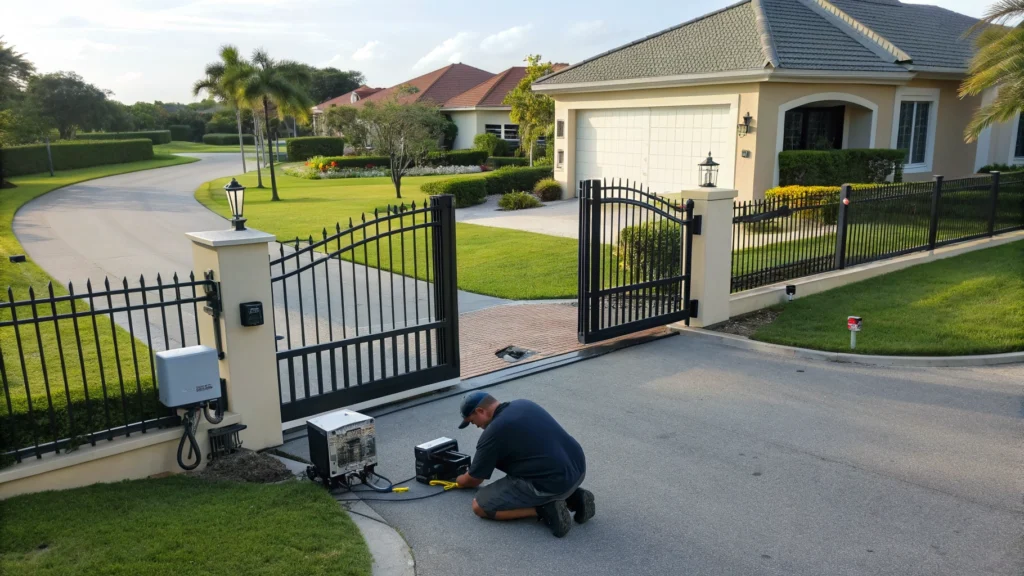
When a homeowner calls and says their gate “isn’t doing anything,” the issue is a power problem roughly 60–70% of the time. Before you assume the motor failed or the control board died, check the power chain from source to operator.
If your gate is hardwired: Check whether the transformer has power. Look at the circuit breaker dedicated to the gate—it’s often a 20-amp breaker on its own circuit. If the breaker tripped, reset it once. If it trips again immediately, stop—there’s likely a short in the wiring or operator, and that’s a technician’s job. Also check whether the low-voltage wiring between the transformer and the operator shows any visible damage. In the Sacramento area, rodents chewing through wiring in outdoor junction boxes is more common than you’d think, especially in properties backing up to open land in Auburn, Grass Valley, and the El Dorado County foothills.
If your gate runs on solar: Check the battery voltage. Most residential gate systems use a 12V battery, and the operator needs a minimum of about 10.5–11V to function. If the battery reads below that, it may have been drained by cloudy weather, a shading issue (tree growth over the panel is a slow creeper), or the battery itself may be at end of life. Solar batteries in Sacramento’s heat typically last 2–4 years before needing replacement—the sustained summer temperatures accelerate electrolyte loss in lead-acid batteries and capacity degradation in sealed AGM batteries.
PSPS and outage scenarios: If your gate stopped working during or after a PG&E Public Safety Power Shutoff or a storm outage, the battery backup may have been depleted. Hardwired systems with DC battery backup can typically sustain light residential use for 24–48 hours during an outage, but that depends on the battery’s age and how many cycles the gate ran while the power was down. Once grid power returns, give the system 4–6 hours to recharge before assuming there’s a deeper problem.
The Gate Tries to Move But Can’t: Operator and Mechanical Issues
If you can hear the motor running—or the operator clicking—but the gate doesn’t move (or moves erratically), the power supply is probably fine and the problem is mechanical or in the operator itself.
Swing gate symptoms to watch for:
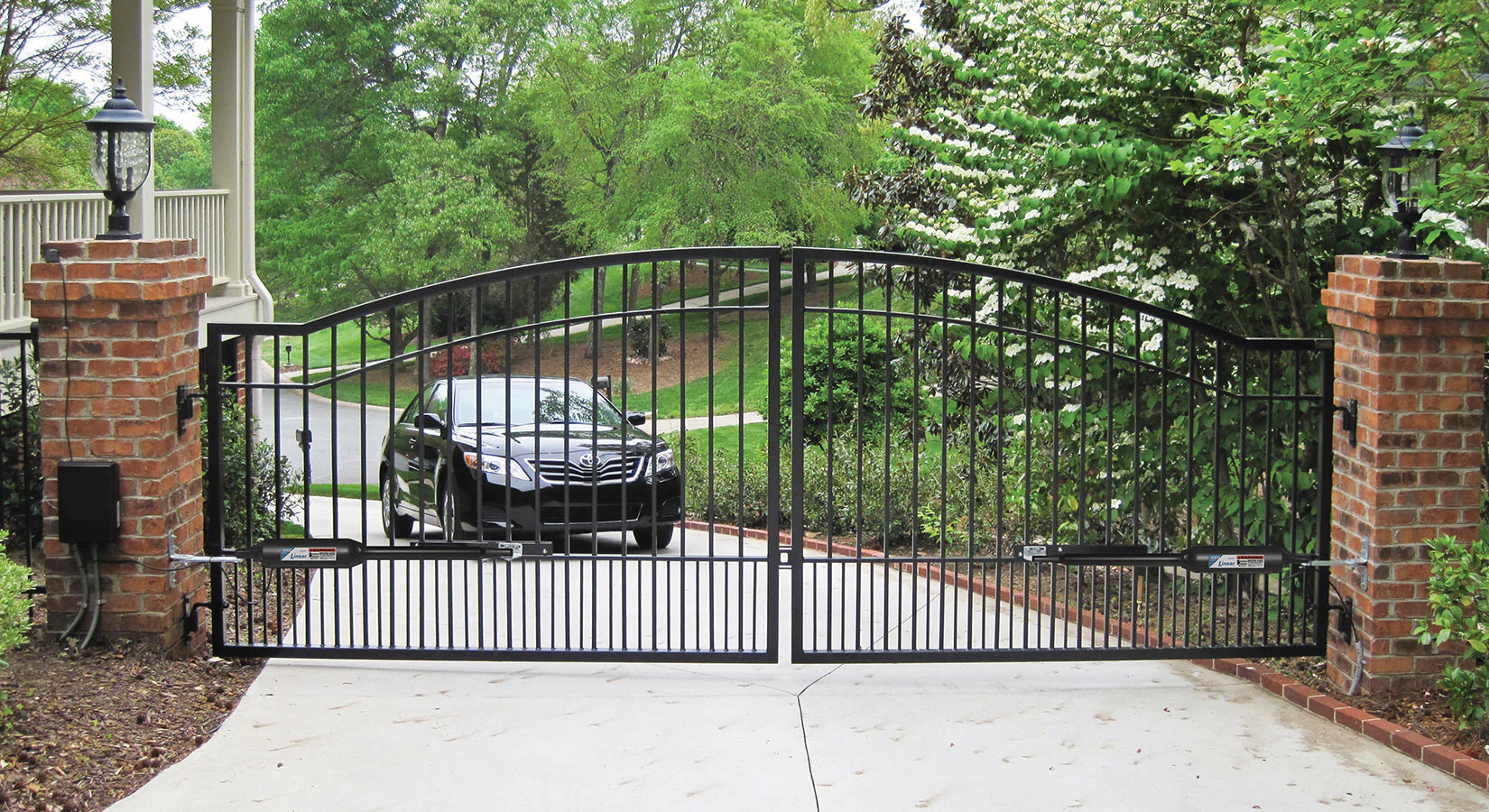
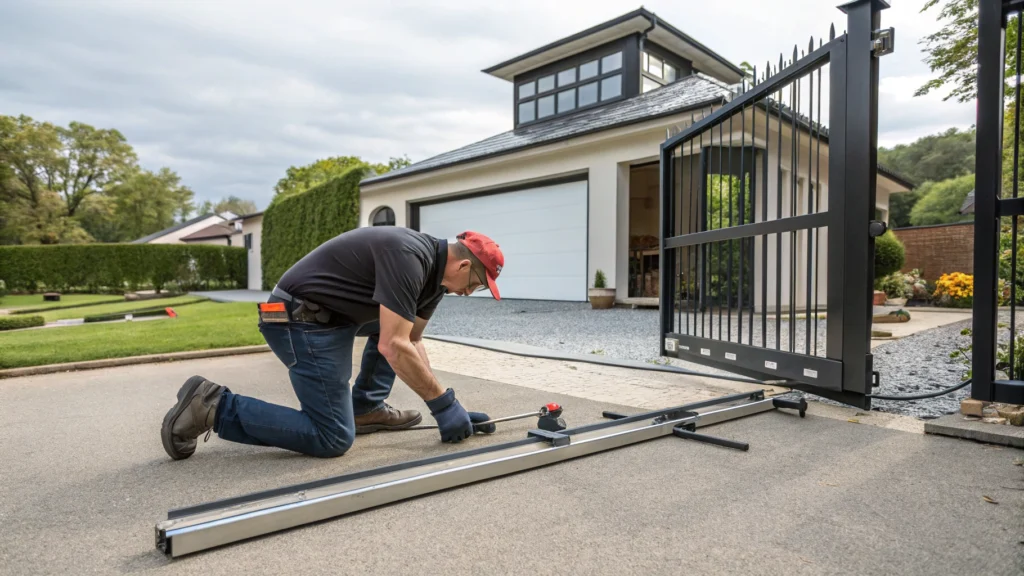
The actuator arm extends but the gate doesn’t swing: this usually means the arm has disconnected from the gate bracket, or the bracket itself has pulled loose from the gate panel. Check the connection point visually. If the bracket bolts have sheared or the weld has cracked, you’ll see it. This is common on heavy wrought iron gates where the repeated force of the actuator eventually fatigues the mounting hardware—especially after Sacramento summers, where metal expansion and contraction cycles stress weld joints daily.
The gate opens but won’t close (or vice versa): this often points to a limit switch issue. The operator uses limit settings to know where the gate’s “full open” and “full closed” positions are. If those settings drift—from post settling, hinge wear, or a gate that’s sagging slightly—the operator reaches its programmed limit before the gate actually arrives at the correct position. On some operators this is adjustable by the homeowner; on others it requires reprogramming at the control board.
Slide gate symptoms to watch for:
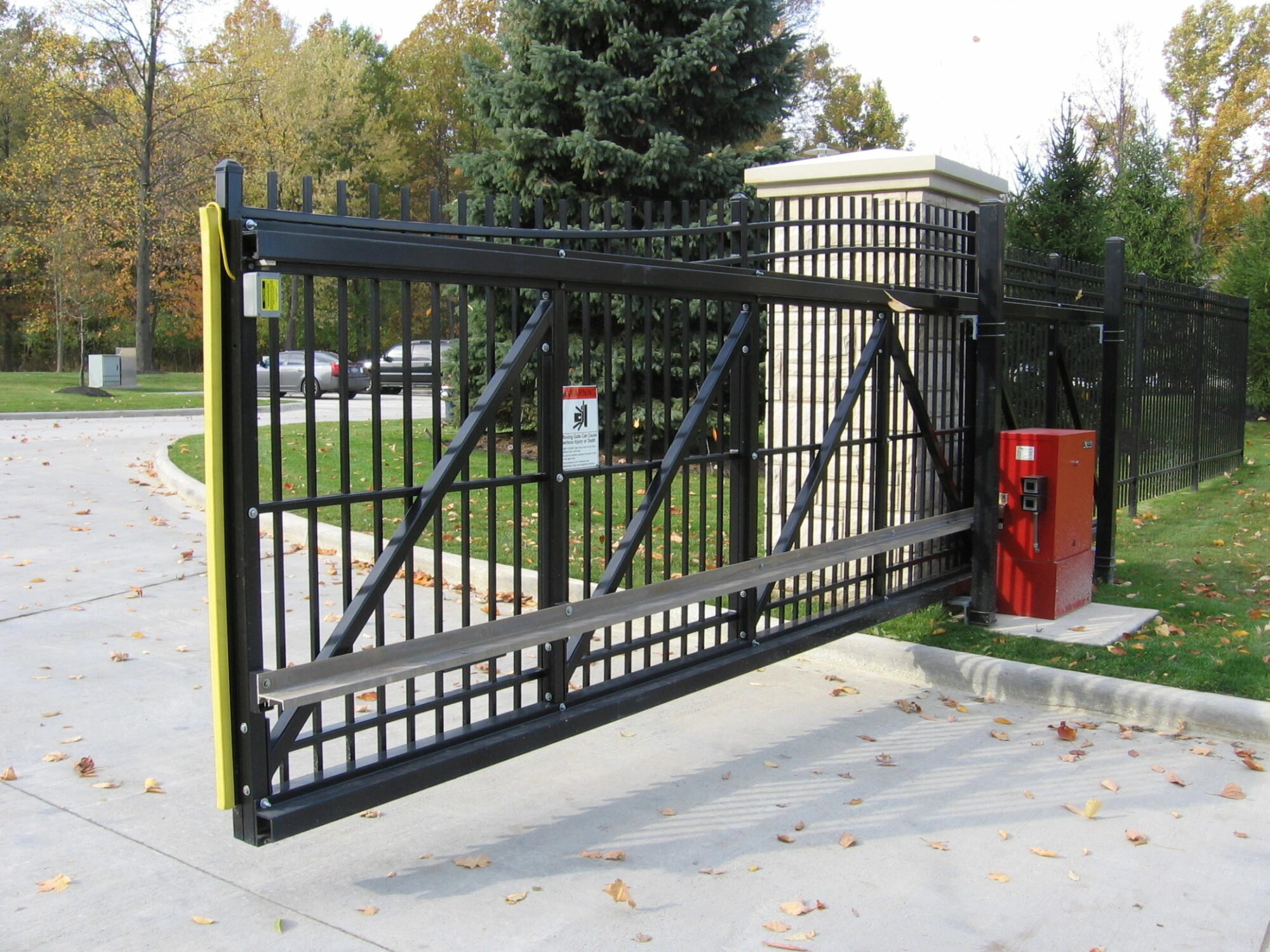
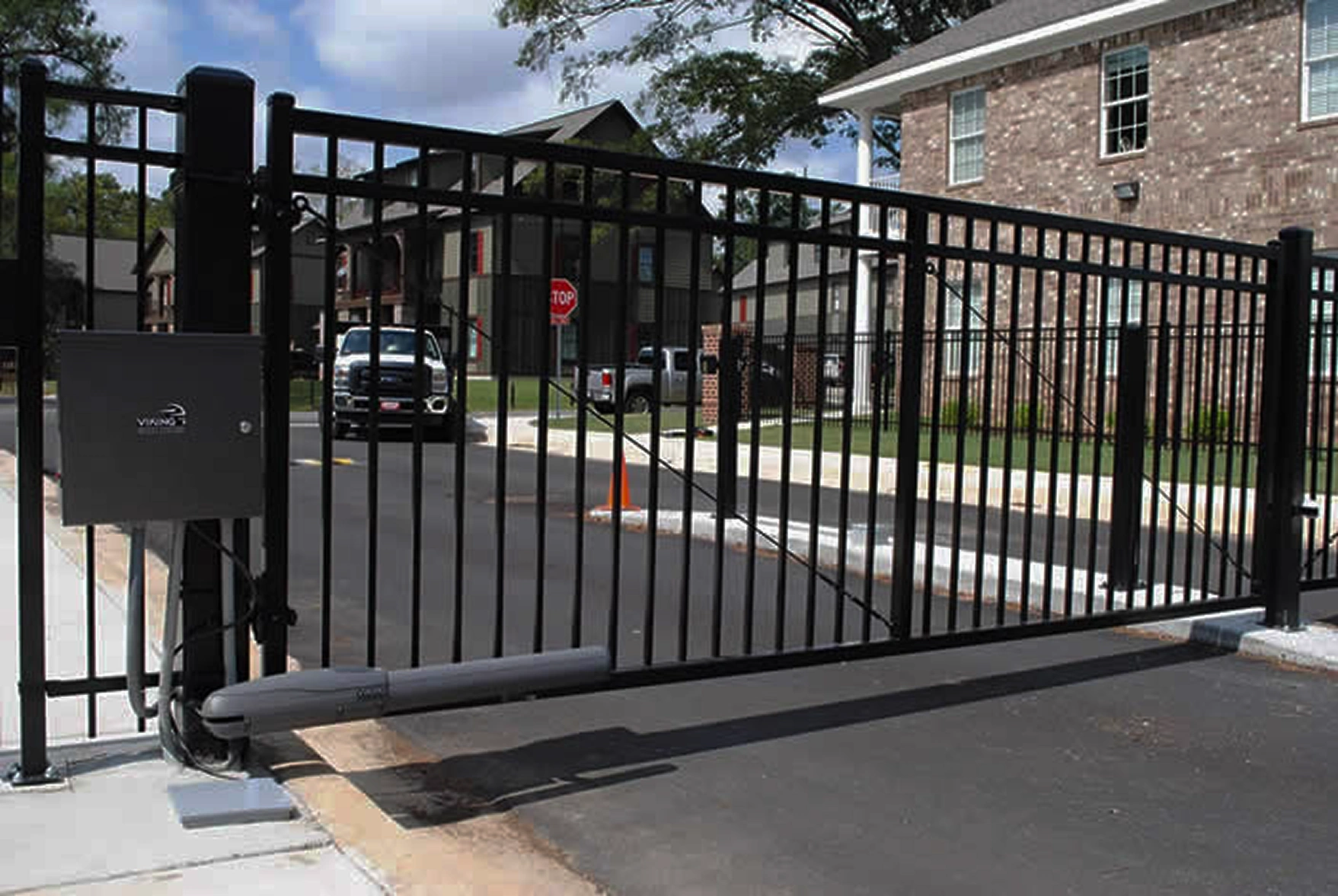
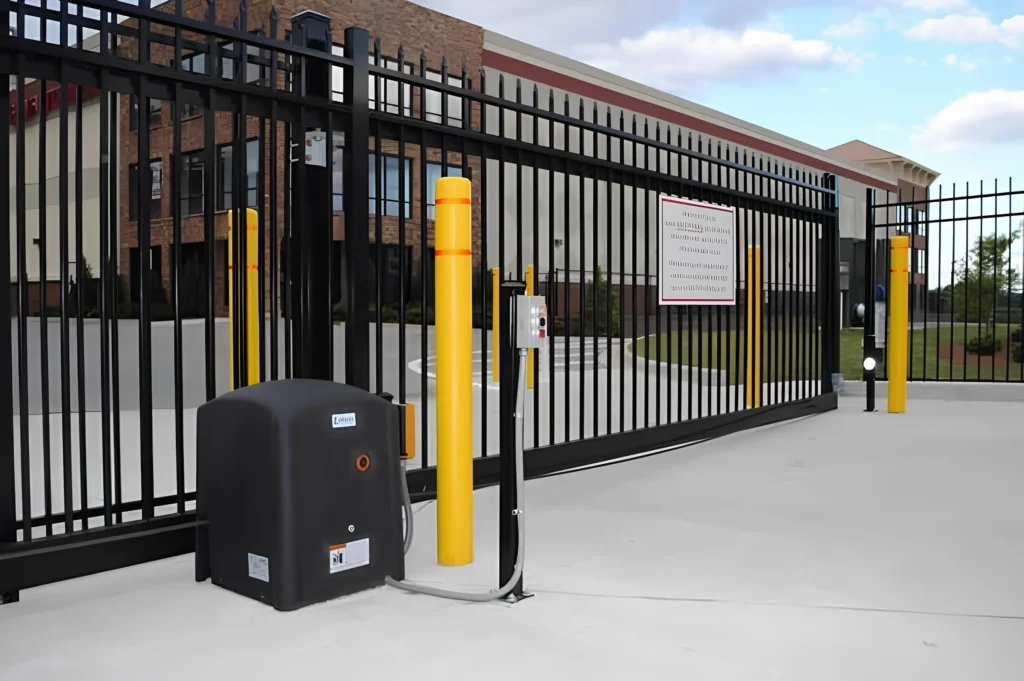
Grinding noise with slow or no movement: check the chain tension. Slide gate chains stretch over time—a natural process accelerated by heat cycling—and a loose chain will skip on the drive sprocket, creating a metallic grinding sound. If the chain has been dragging on the ground, it’s been accumulating dirt and grit that accelerates wear on both the chain and the sprocket teeth. A chain that’s been dragging for more than a few weeks usually needs replacement rather than just re-tensioning.
Gate moves a few inches and then stops or reverses: this is almost always a safety sensor triggering. The operator interprets the signal as an obstruction and reverses to prevent entrapment. See the safety sensor section below.
Blinking Lights and Error Codes: Reading Your Control Board
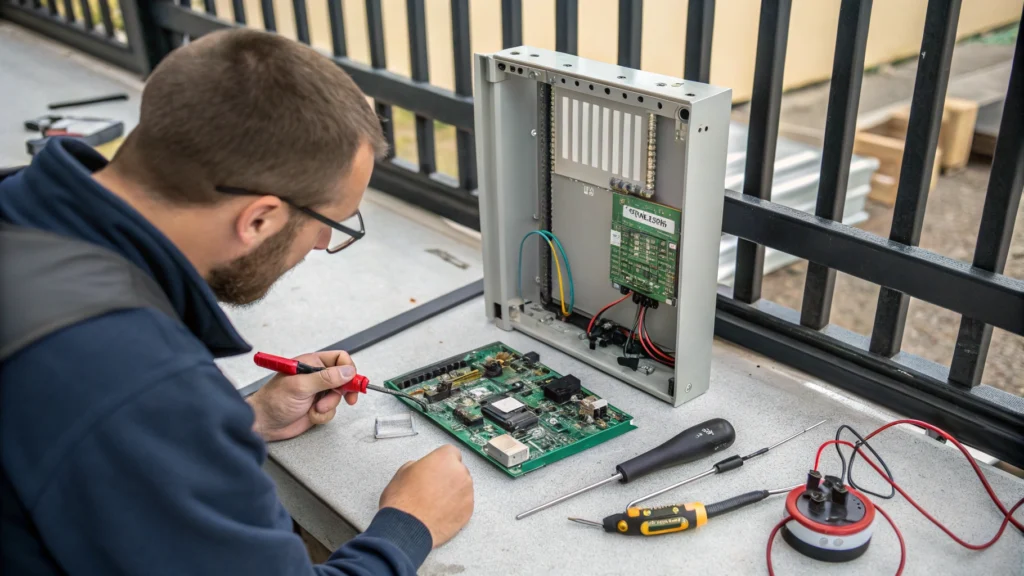
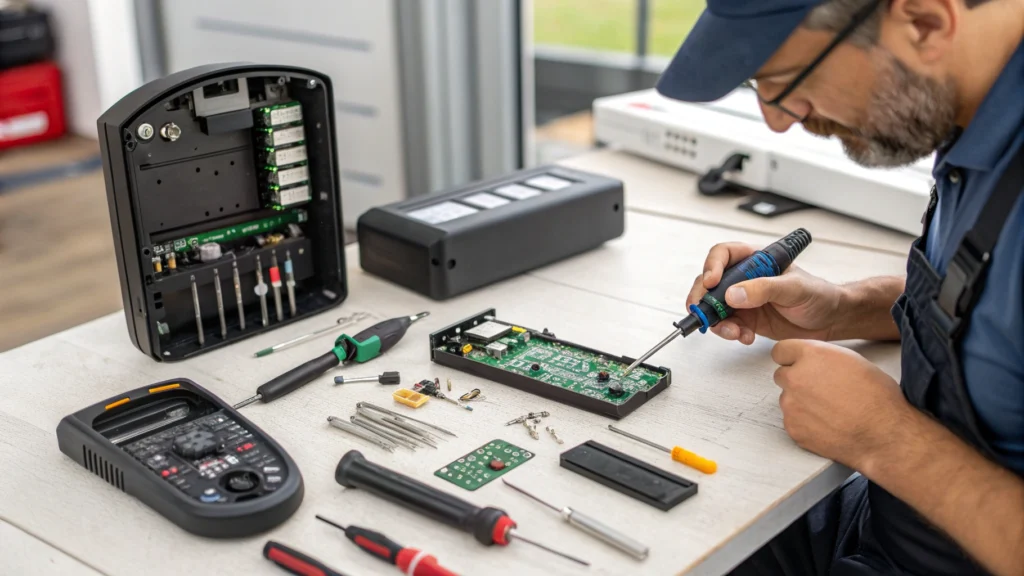
The control board is the brain of your gate system, and most modern operators—including LiftMaster’s residential and commercial lines—communicate problems through LED status indicators or diagnostic codes. If your gate isn’t working, opening the operator housing and looking at the control board lights can tell you (or your technician) exactly what the system thinks is wrong.
Common patterns include a steady red LED indicating a safety sensor fault, a blinking pattern indicating a specific error code (the number of blinks corresponds to a diagnostic code in the operator’s manual), or no lights at all—which points back to a power issue. If you can note the LED pattern before calling for service, it saves diagnostic time on the repair visit.
Control boards themselves can fail, particularly after electrical surges. Sacramento’s dry summer lightning—rare but intense—and power fluctuations during PSPS restoration events can spike voltage through the system. If your gate stopped working immediately after a power event and the board shows no lights or erratic behavior, a surge-damaged control board is a strong possibility. This is one of the reasons we recommend surge protection as part of every installation, and it’s something we check during annual maintenance visits.
The Gate Reverses or Won’t Close: Safety Sensor Problems
UL 325 requires every residential automated gate to have at least two entrapment protection devices. When those devices detect a problem—or when the system thinks they detect a problem—the gate will stop, reverse, or refuse to operate. This is the system working correctly to prevent injury. But it can be frustrating when there’s no actual obstruction and the gate still won’t cooperate.
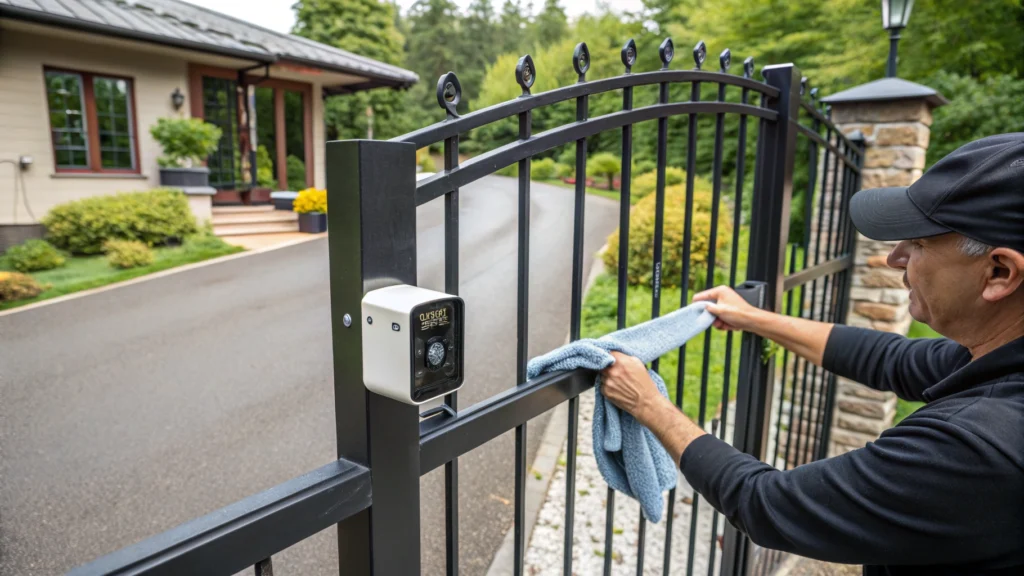
Photo eye misalignment. Photo eyes are infrared beam sensors mounted on either side of the gate opening. If the beam is broken by an object—or if the sensors have shifted out of alignment so they can’t “see” each other—the gate will not close. Common causes: post settling shifts the sensor angle, a spider web across the lens (extremely common in spring and fall), dirt or pollen accumulation on the lens, or vegetation growth that partially blocks the beam path. A quick clean and visual check of alignment is something any homeowner can do before calling for service.
Safety edge failure. Contact safety edges are pressure-sensitive strips mounted on the gate’s leading edge. If the safety edge is damaged, waterlogged, or its wiring has degraded, it can send a false “contact” signal to the control board, causing the gate to reverse repeatedly. In Sacramento’s climate, the rubber housing on safety edges degrades faster due to UV exposure and heat cycling, making this a relatively common failure point on systems older than 5–7 years.
Sensor monitoring failures. Since the UL 325 7th Edition took effect, gate operators are required to monitor connected safety sensors at least once per cycle. If a sensor becomes disconnected or fails the monitoring check, the operator will not cycle the gate at all. This is a safety feature—not a malfunction—but it means a single broken sensor wire can shut down the entire system. If your gate suddenly refuses to operate and the control board shows a sensor fault code, a disconnected or damaged sensor wire is the most likely culprit.
5. Remote Control & Keypad Repairs
When one access method works but another doesn’t, the operator itself is usually fine—the problem is in the specific access device or its wiring.
Remotes: If your RF remote (clicker) has stopped working, replace the battery first. If it still doesn’t work, try standing within 10 feet of the operator—if it works at close range but not from the driveway, the antenna on the operator’s receiver may be damaged or disconnected. If the remote doesn’t work at any range, it may need to be reprogrammed to the receiver. This can happen after a control board replacement or a power surge that resets the receiver’s memory.
Keypads: Keypads fail for a few predictable reasons. The most common in our climate is UV degradation of the membrane buttons—after several years of direct sun exposure, the buttons become unresponsive or require excessive pressure. Wiring corrosion at the terminal connections is another cause, especially on older installations where the wire nuts or terminals weren’t properly sealed against moisture. And occasionally, the keypad’s internal memory can lose programmed codes after a power event, requiring reprogramming.
Smartphone apps: If your gate is connected to a Wi-Fi or cellular-based smart control system and the app stops working, check whether the operator’s communication module has power and internet connectivity. These modules connect to your home Wi-Fi network and can lose connection after a router reboot, firmware update, or password change. The fix is usually straightforward—reconnecting the module to the network—but it’s not always obvious that the gate problem is actually a Wi-Fi problem.
Get Your Driveway Gate Repaired Today!
Whether your gate is stuck, making strange noises, or not responding, The Automated Gate Company is here to help. Our expert technicians are trained to diagnose and repair all driveway gate issues, ensuring smooth, secure, and long-lasting operation.
Frequently Asked Questions
Have questions about our automated gate solutions? We’ve gathered answers to the most common inquiries. If you need more information, our team is here to help!
What types of driveway gates do you repair?
We repair all types of driveway gates, including automatic, sliding, swing, metal, and security gates. Our team has experience with a wide range of gate models and systems.
How do I know if my gate motor needs repair?
Common signs of a faulty gate motor include the gate not opening or closing, an unresponsive remote or keypad, or intermittent or slow operation. If you notice any of these issues, it might be time for a motor check.
What should I do if my gate isn’t responding to my remote or keypad?
If your remote or keypad isn’t working, it could be due to a dead battery, signal interference, or a problem with the control board. We provide quick repairs or replacements to restore full functionality.
How can I tell if my gate’s safety sensors are malfunctioning?
If your gate won’t close due to blocked or dirty sensors, or if it reverses unexpectedly when closing, it’s likely a sensor issue. We inspect and clean your sensors or replace them as necessary to ensure safety features work properly.
What causes gate misalignment, and how do you fix it?
Misalignment can occur from vehicle impact, weather conditions, or general wear. We offer structural repairs to realign your gate, fix damaged hinges or rollers, and address any rust or corrosion issues.
Do you offer emergency driveway gate repair services?
Yes! We provide emergency repair services to restore access and security to your property as quickly as possible. Our team is available to handle urgent issues and ensure your gate is working properly.