Electric Driveway Gates
Electric Driveway Gates: What Sacramento Homeowners Need to Know Before Automating
Adding an electric operator to your driveway gate—or installing a new automated gate from scratch—is one of the most impactful upgrades a homeowner can make. It changes how you arrive home, how you manage deliveries and visitors, and how secure your property is when you’re away. But between the operator types, power source options, access control choices, and safety requirements, there’s more to the decision than most people expect.
How Electric Gate Operators Actually Work
An electric driveway gate system has three core components: the operator (the motorized unit that moves the gate), the control board (the brain that processes signals and manages safety logic), and the access control devices (the remotes, keypads, or apps you use to trigger the gate).
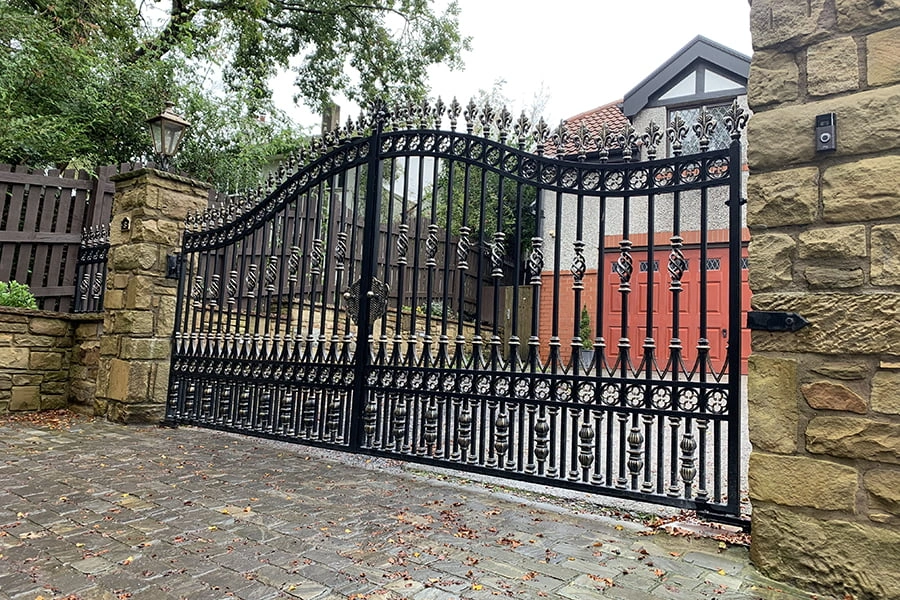
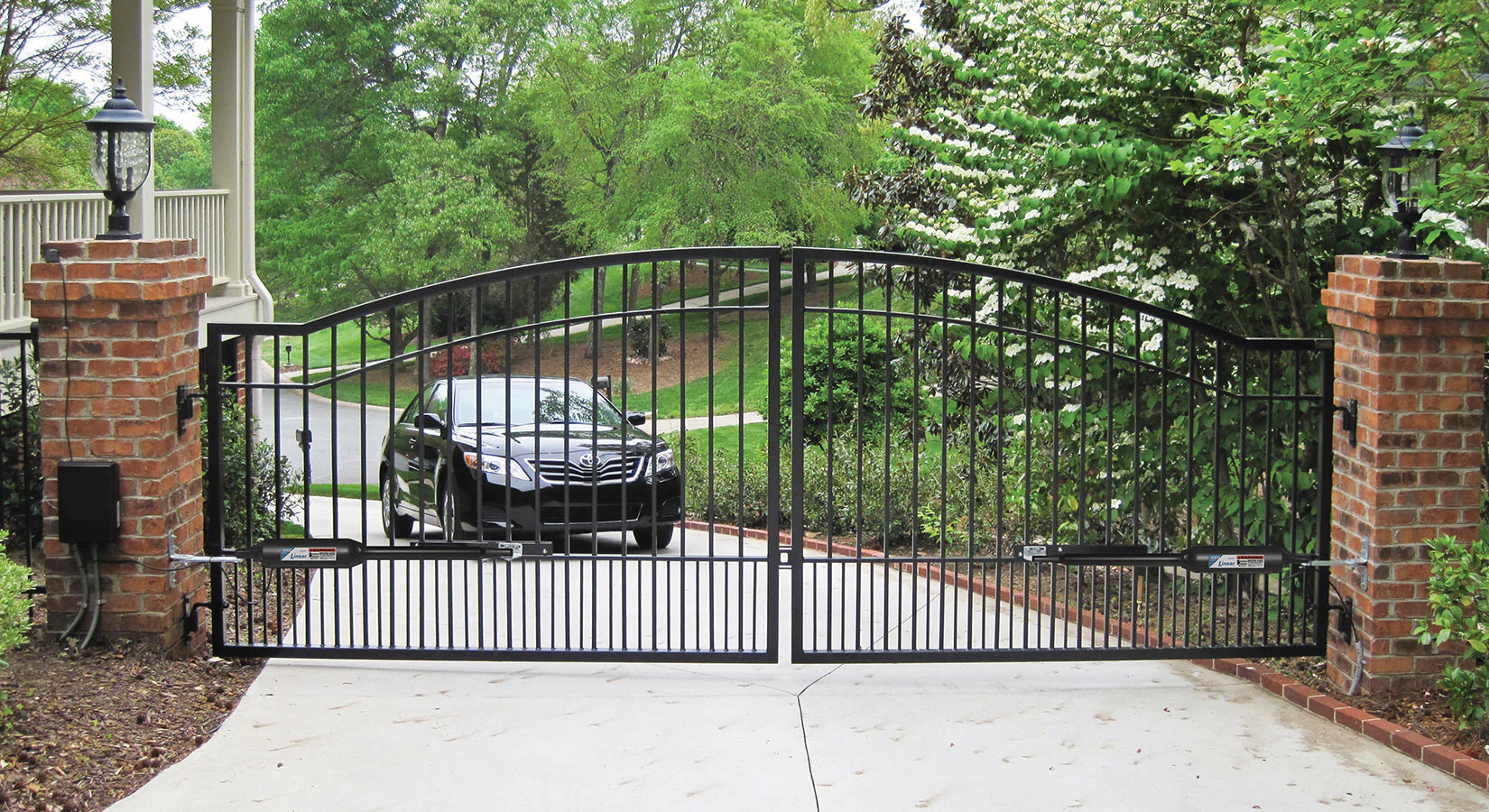
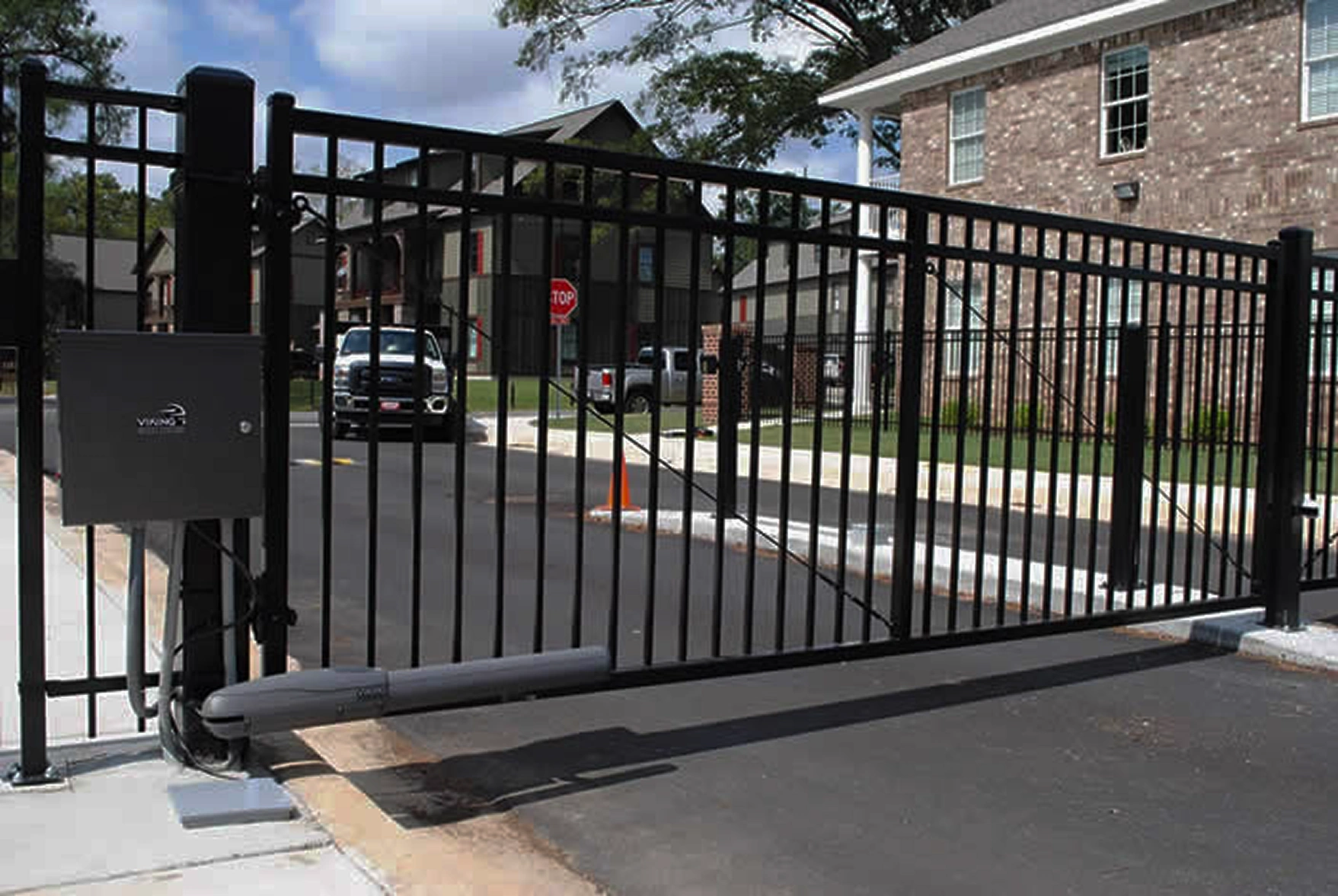
Swing gate operators attach to the gate panel and hinge post using either a linear actuator or an articulating arm. Linear actuators are the most common for residential installations—compact, reliable, and suited for swing gates up to about 16 feet wide and 850 pounds. For dual swing gates, each panel gets its own operator coordinated by the control board.
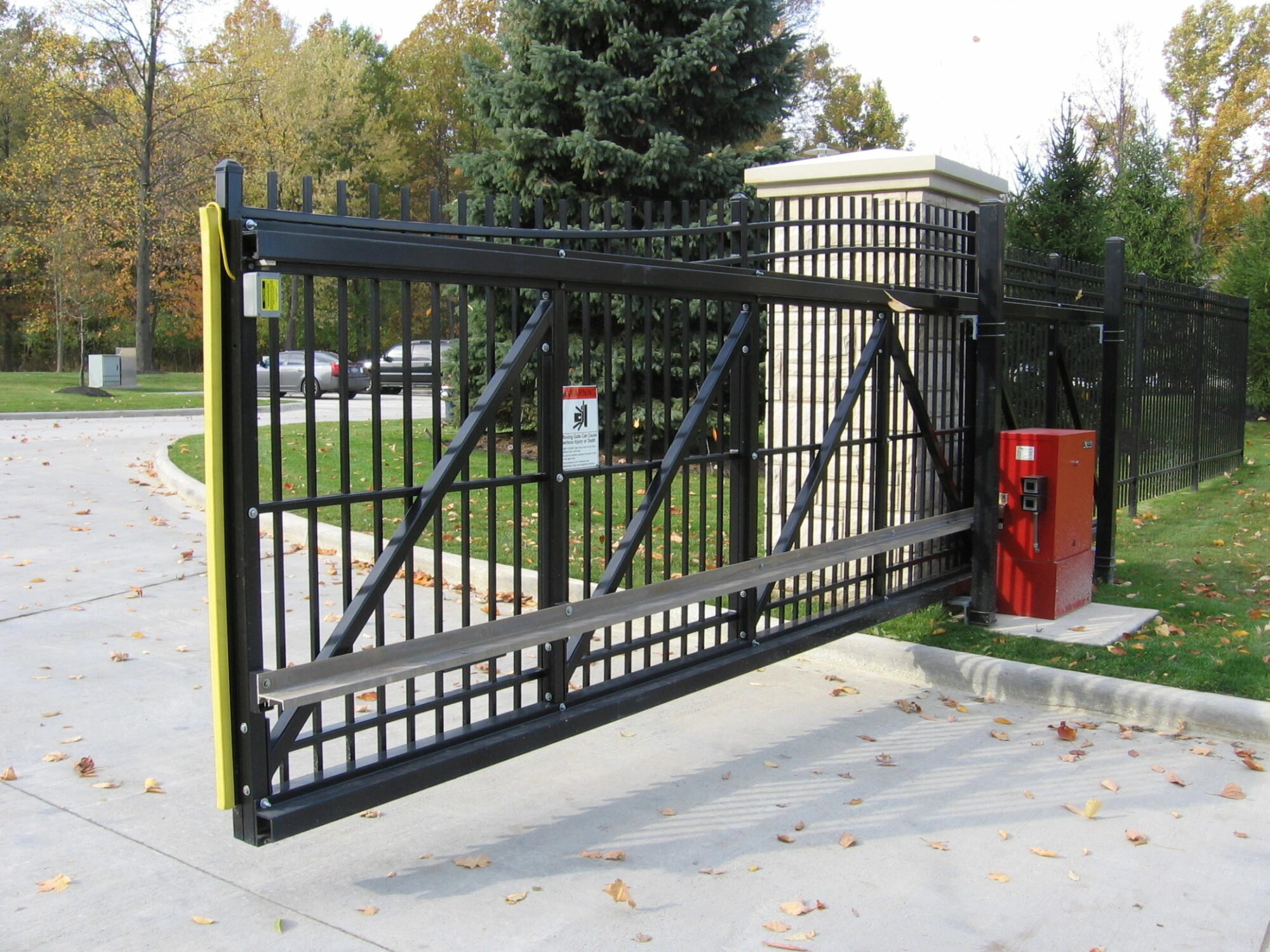
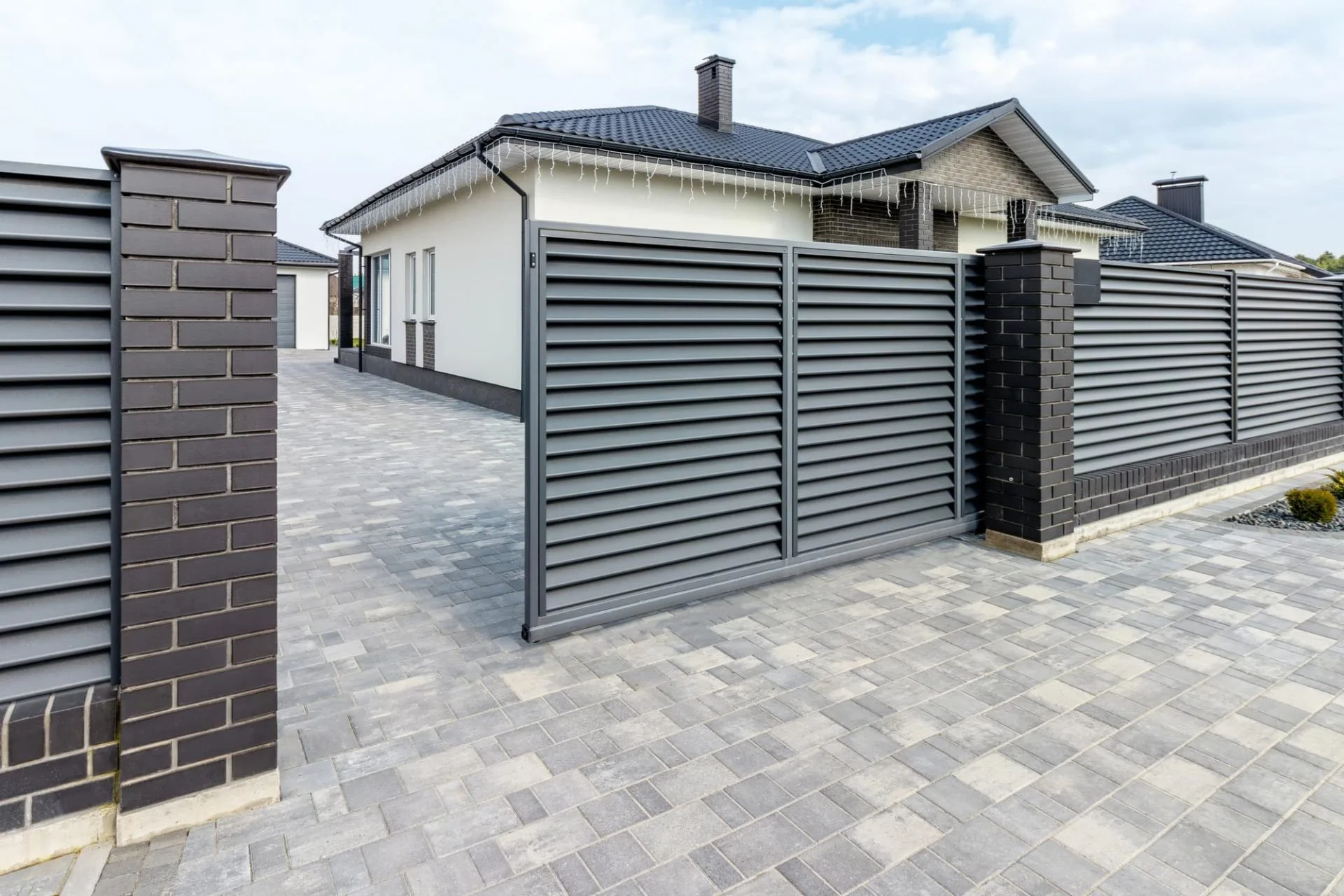
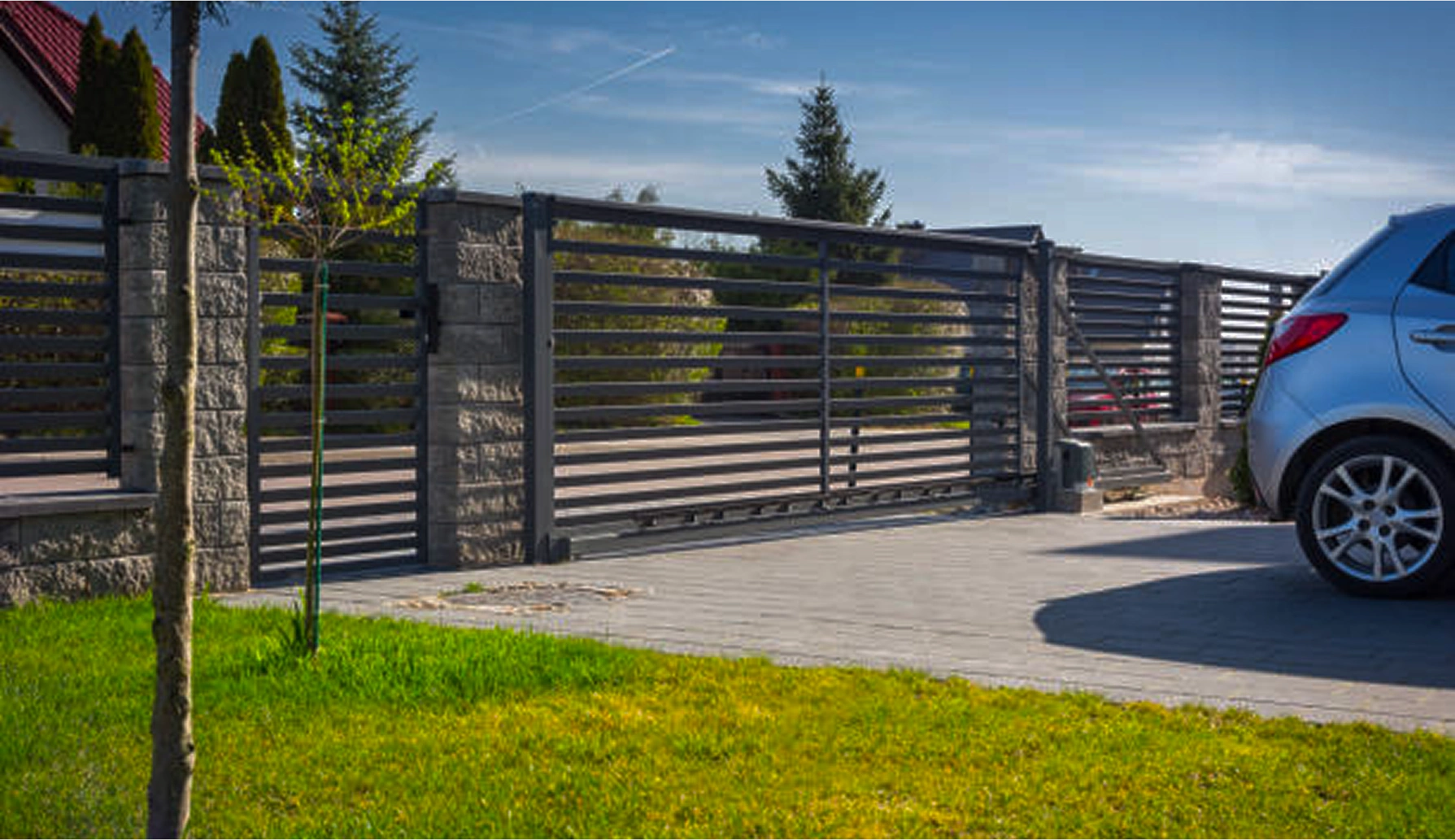
Slide gate operators use a drive gear or chain mechanism to move the gate horizontally along a V-track or cantilever system. They’re the right choice for properties with sloped driveways, limited setback space, or heavy gate panels. If you’re unsure which type suits your driveway, our swing vs. slide gate comparison breaks down the decision in detail.
Both types draw 12V or 24V DC power in most residential configurations. DC operators are quieter, more energy-efficient, and compatible with solar power and battery backup systems—which matters in our region. Matching the right operator to your gate’s weight and duty cycle is one of the most important decisions in the project.
Common Residential Gate Repair Issues
Powering Your Electric Gate: Solar, Hardwired, and Battery Backup
Power source is one of the first decisions in any electric gate installation, shaped by two Sacramento-area factors: distance from your electrical panel and PG&E Public Safety Power Shutoff (PSPS) exposure.
Hardwired AC/DC is the most reliable option when the gate is within reasonable trenching distance from an electrical source (typically under 100 feet). A low-voltage transformer steps power down to the operator’s requirements. This is straightforward in suburban neighborhoods across Sacramento, Elk Grove, and Roseville where homes are close to their panels.
Solar eliminates trenching costs for properties where the gate is far from the panel—common on larger lots in Auburn, Grass Valley, and the El Dorado County foothills. With Sacramento averaging over 260 sunny days per year, solar generates more than enough energy for a gate cycling 10–20 times daily. That said, solar systems have real limitations in winter fog and cold that homeowners need to understand before choosing this path.
Battery backup is essential regardless of primary power source. PG&E PSPS events have affected communities from Grass Valley to the Auburn foothills, and a gate that stops working during an outage can block emergency access or evacuation. Every system we install includes battery backup as a standard component.
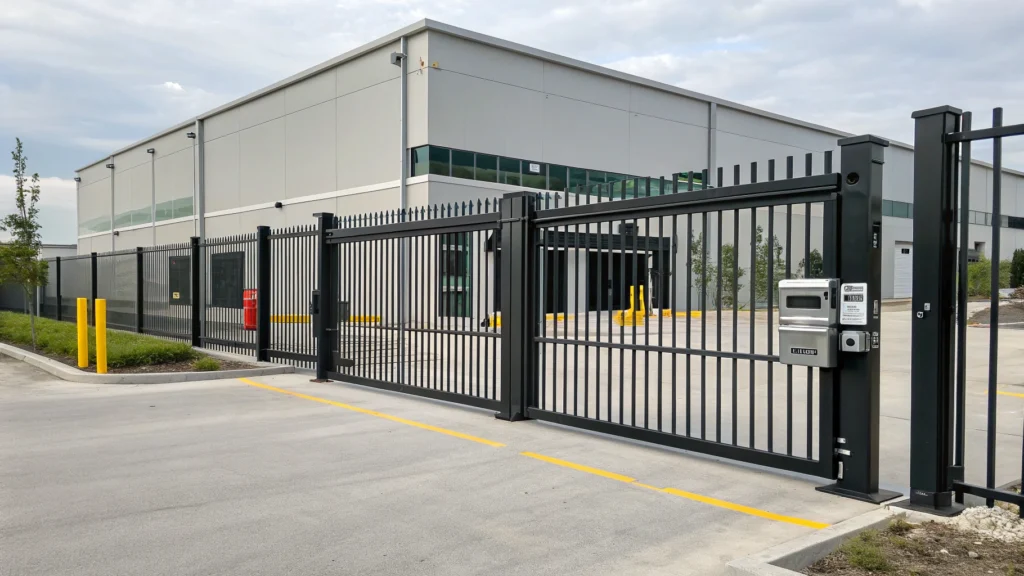
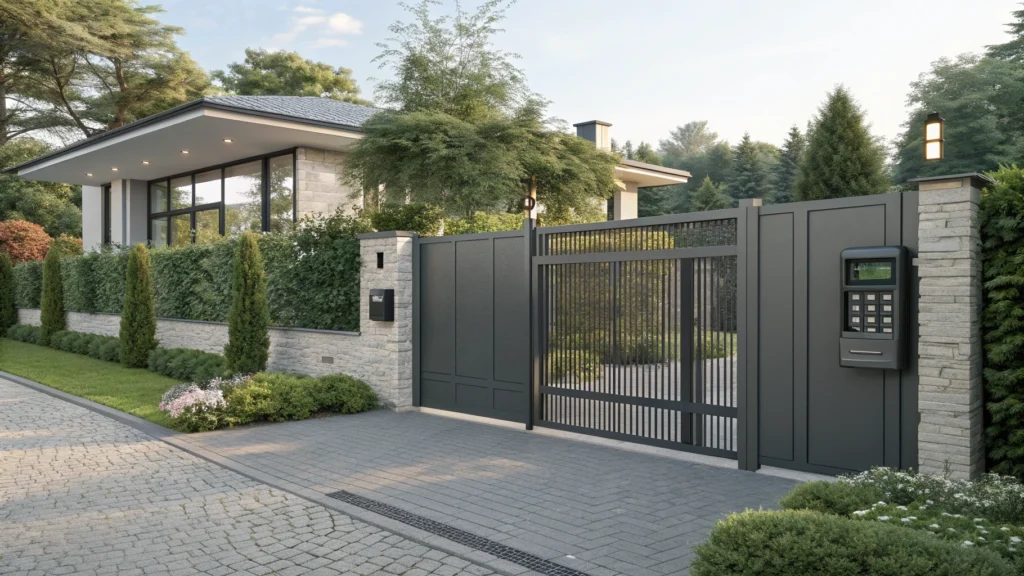
Access Control: From Basic Remotes to Smart Home Integration
Most systems support multiple access methods simultaneously, and the right combination depends on how you use your property.
RF remotes are the simplest—a handheld transmitter that works from inside your car. Keypads mounted at the gate entrance let visitors enter a code you’ve provided, with better models supporting multiple user codes for individual access management. Smartphone control through manufacturers like LiftMaster lets you open the gate from your phone, receive alerts, and grant temporary access remotely. Telephone entry systems are more common in commercial and HOA installations but some homeowners add them for convenience.
The critical point: access control decisions must be made before installation. Retrofitting a keypad or phone entry system later means trenching new wiring across a finished driveway—significantly more expensive than including it in the original design.
What to Expect During Installation
A typical residential gate installation involves five phases. The site assessment evaluates driveway grade, opening width, soil conditions, power source options, and access control requirements—this is where material, operator, and safety device decisions are made together. Foundation work includes setting gate posts in concrete footings, embedding V-track or cantilever hardware, and trenching conduit for power and wiring.
Next comes gate and operator installation—hanging the panel, mounting the operator, terminating wiring, and positioning safety devices. Then programming and testing: configuring travel limits, auto-close timing, and safety monitoring, followed by cycling the system multiple times. Finally, a homeowner walkthrough covers every access method, safety device function, the manual release location, and the ongoing maintenance schedule. Homeowners considering DIY installation should understand the risks involved before committing to that path.
Most installations are completed in one to two days. Projects requiring extensive trenching, solar panel mounting, or custom fabrication may take longer.
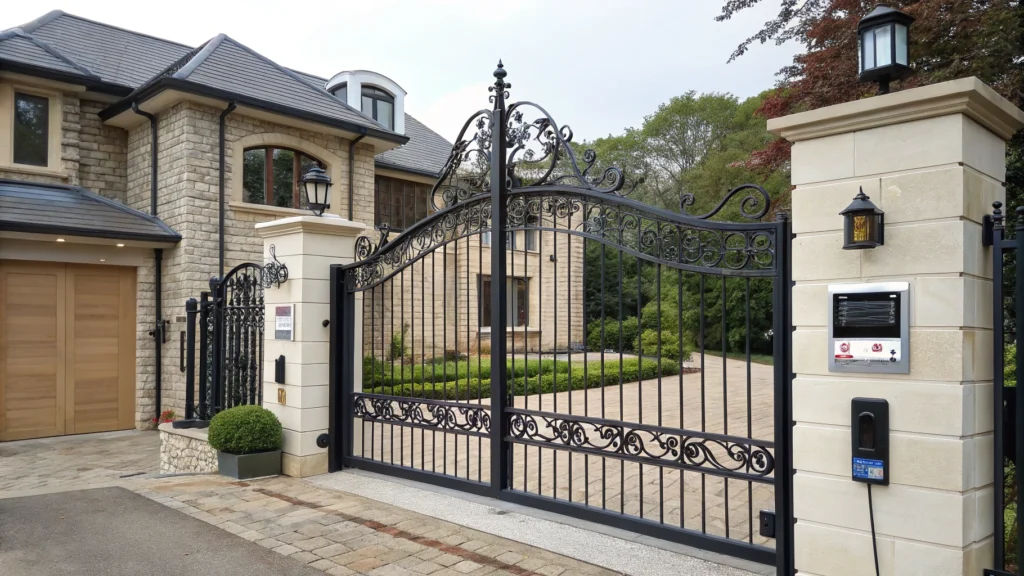
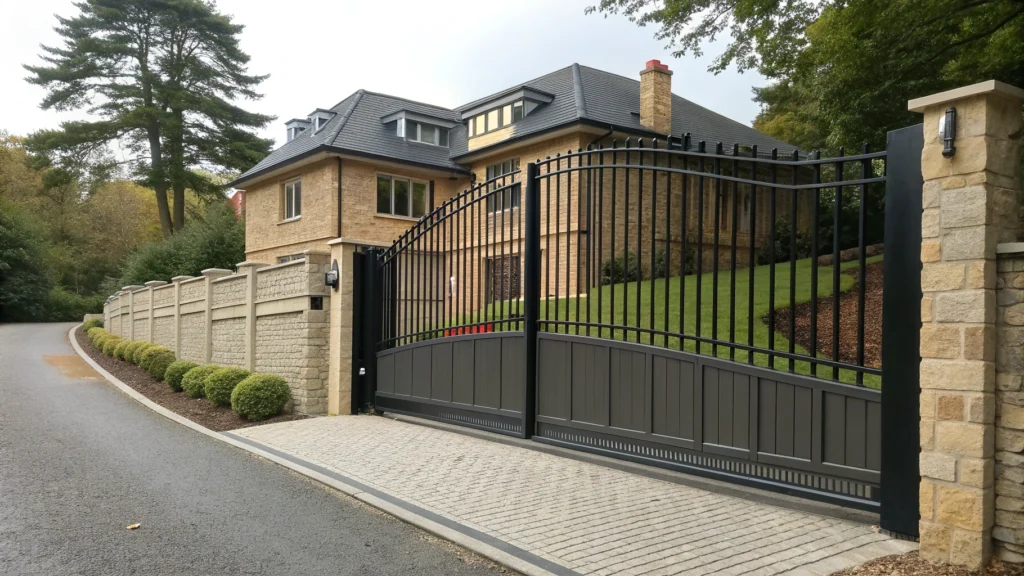
Can You Electrify an Existing Manual Gate?
Yes—with caveats. The existing gate must meet current ASTM F2200 construction standards before an operator can be attached. This standard governs gap sizes (no openings larger than 2.25 inches), leading-edge design, and structural integrity for gates intended to be automated. Common issues with older manual gates include insufficient rigidity for operator forces and hinge posts not rated for motorized stress. During the site assessment, we evaluate whether your gate can be automated as-is, needs modifications, or whether a new gate is the more cost-effective path. Our article on the types of gates that can be automated covers the material options in detail.
Why Choose The Automated Gate Company?
Expert Installation & Repairs
We specialize in automatic gate installation, maintenance, and repair.
High-Quality Materials
Durable materials like steel, chain-link, wood, and vinyl long-lasting gates.
Advanced Automation
Integrate with smartphone controls, keypads, and security cameras.
Fast & Reliable Service
Our team is committed to providing efficient and professional service.
Frequently Asked Questions
Have questions about our automated gate solutions? We’ve gathered answers to the most common inquiries. If you need more information, our team is here to help!
What types of electric driveway gates do you offer?
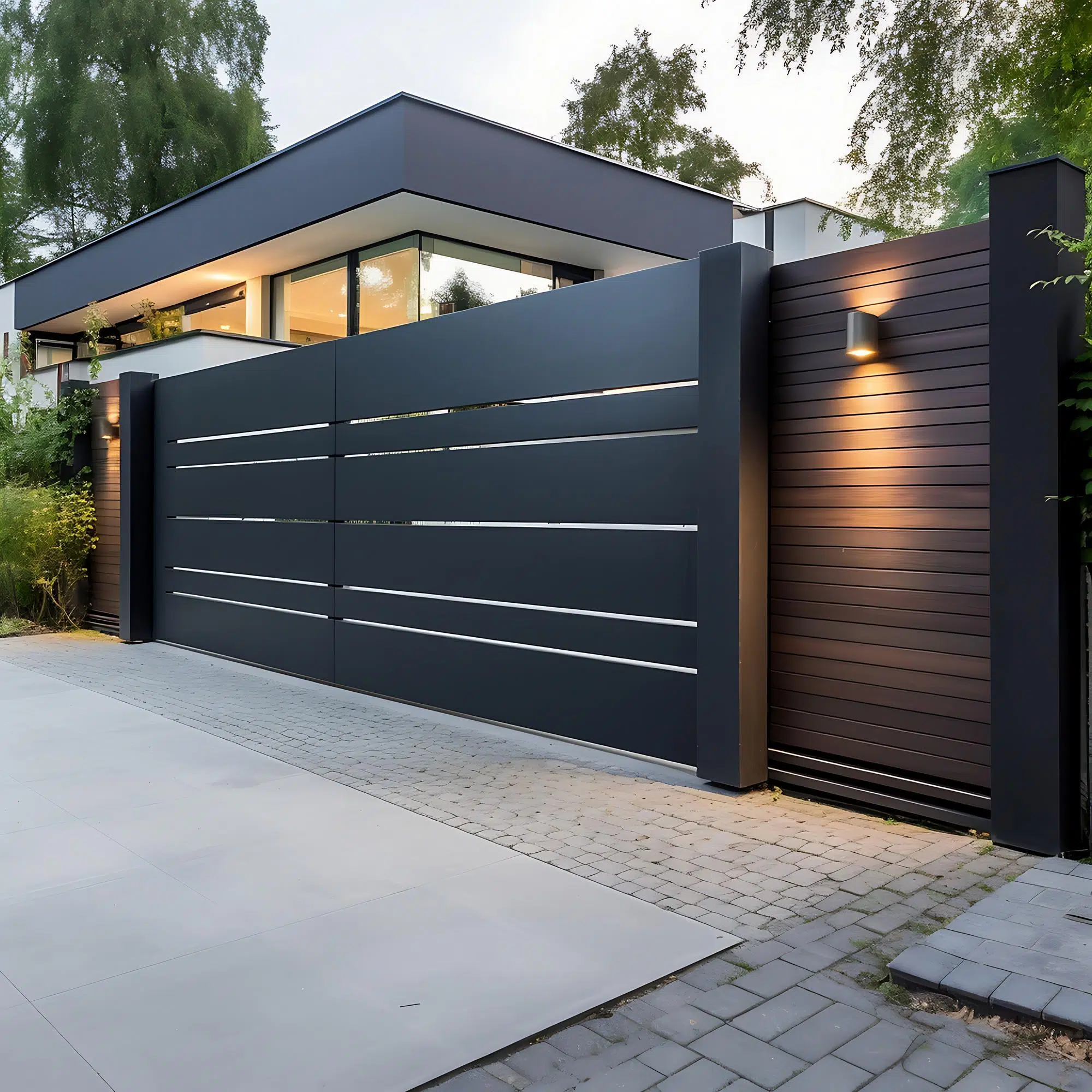
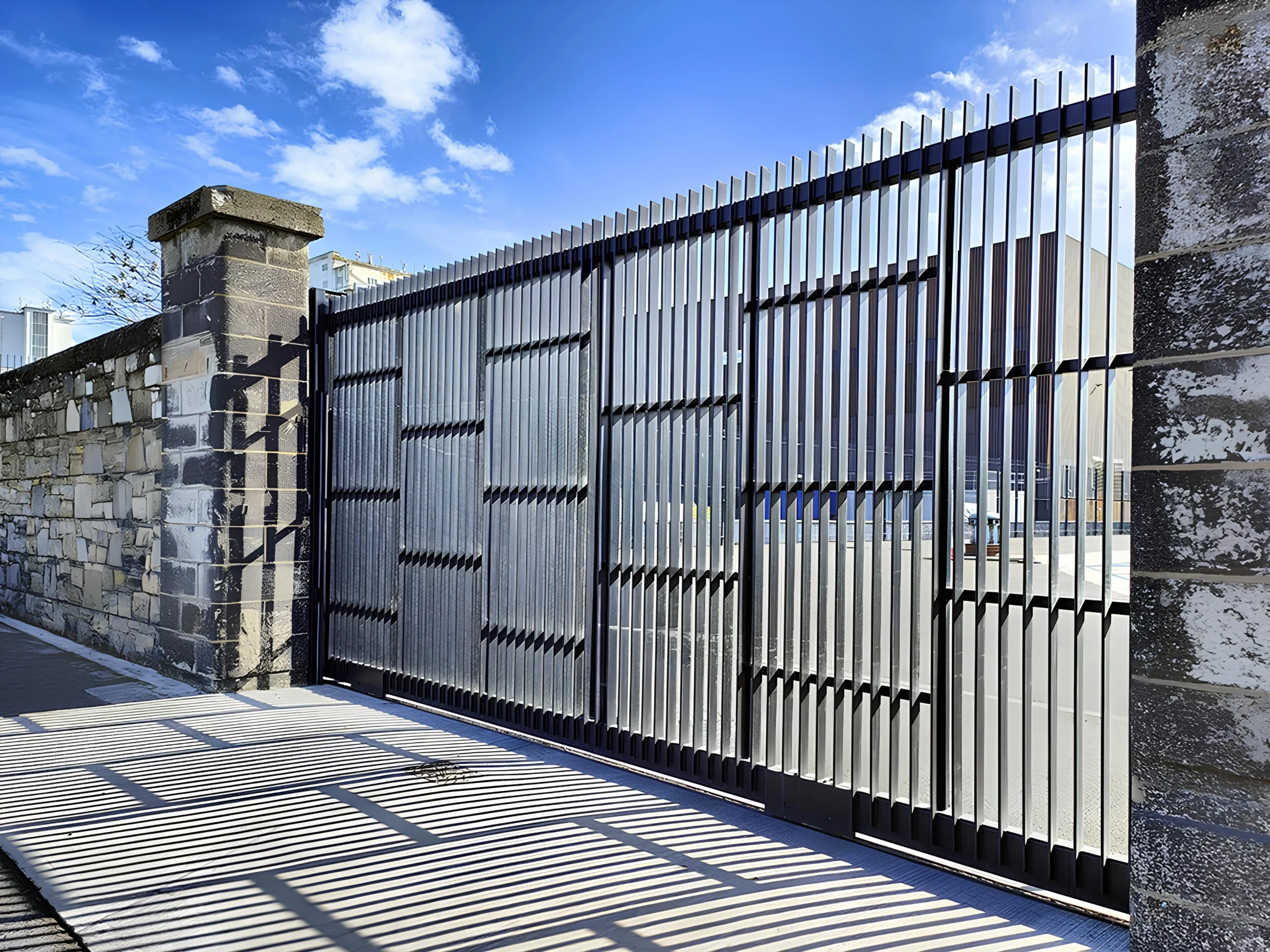
We offer a range of electric driveway gates, including commercial and residential options, sliding gates, and swing gates. These can be customized in wood, metal, aluminum, or steel to match your property’s needs.
What are the advantages of installing electric driveway gates?
Electric driveway gates provide enhanced security, convenience, and privacy. They offer features like remote operation, smartphone apps, proximity card readers, and automatic vehicle detection for seamless access.
Can electric gates be customized for both homes and businesses?
Yes, we offer both residential and commercial electric gate solutions. For homes, we provide stylish options with enhanced privacy, while commercial gates focus on secure access control and durability for high-traffic areas.
How do sliding electric gates work?
Sliding electric gates are ideal for properties with limited space or steep driveways. They operate along a track and can be cantilevered for uneven ground or feature a V-track system for paved surfaces, ensuring smooth and efficient movement.
Are swing electric gates easy to operate?
Yes, swing electric gates are equipped with hydraulic or electromechanical actuators for smooth operation. They can be opened remotely using keypads, smartphones, or remote controls, providing easy access for homeowners or businesses.
Why should I choose The Automated Gate Company?
The Automated Gate Company specializes in expert installation, repair, and maintenance of high-quality electric gates. We use durable materials like steel and aluminum, and integrate advanced automation features for convenience and security.