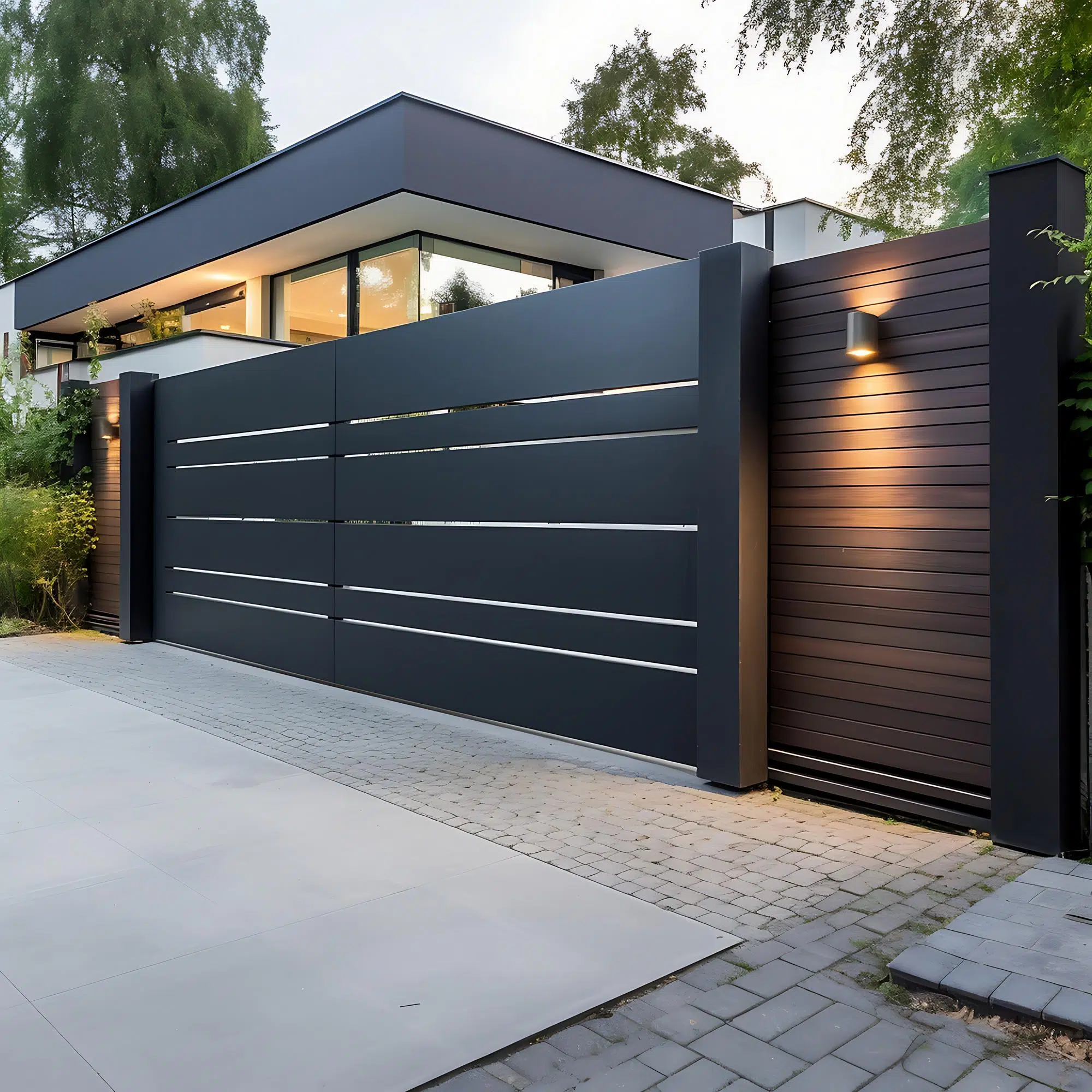
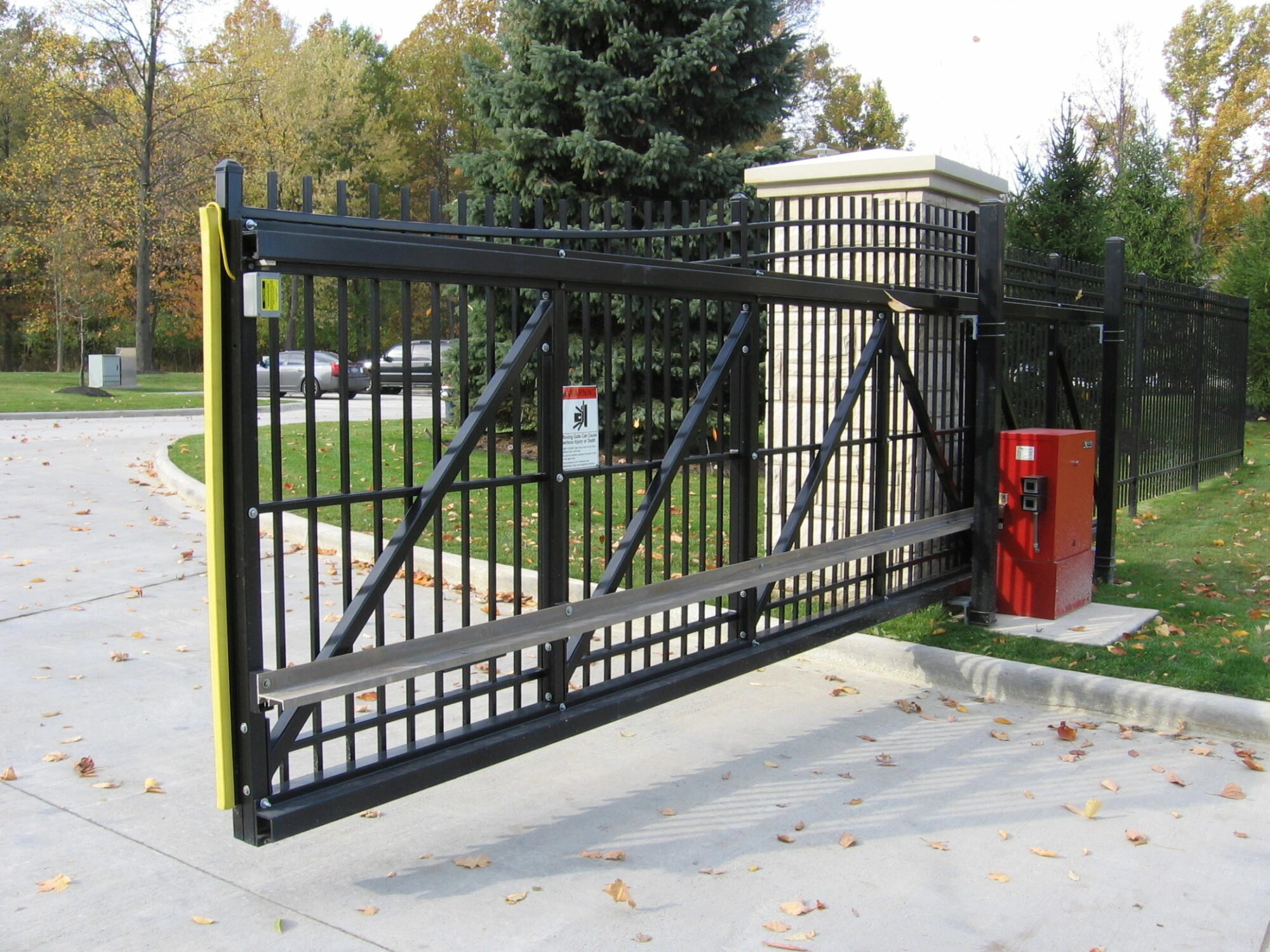
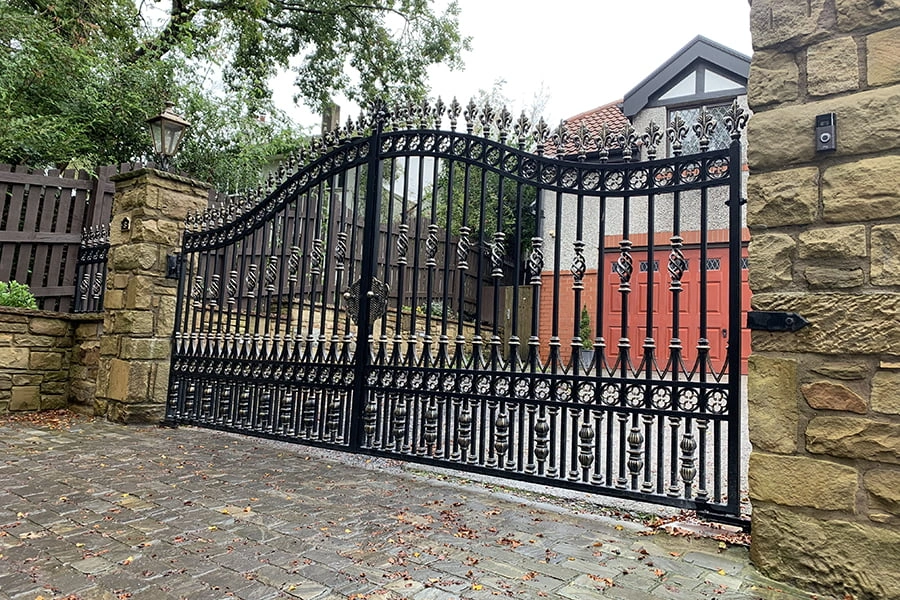
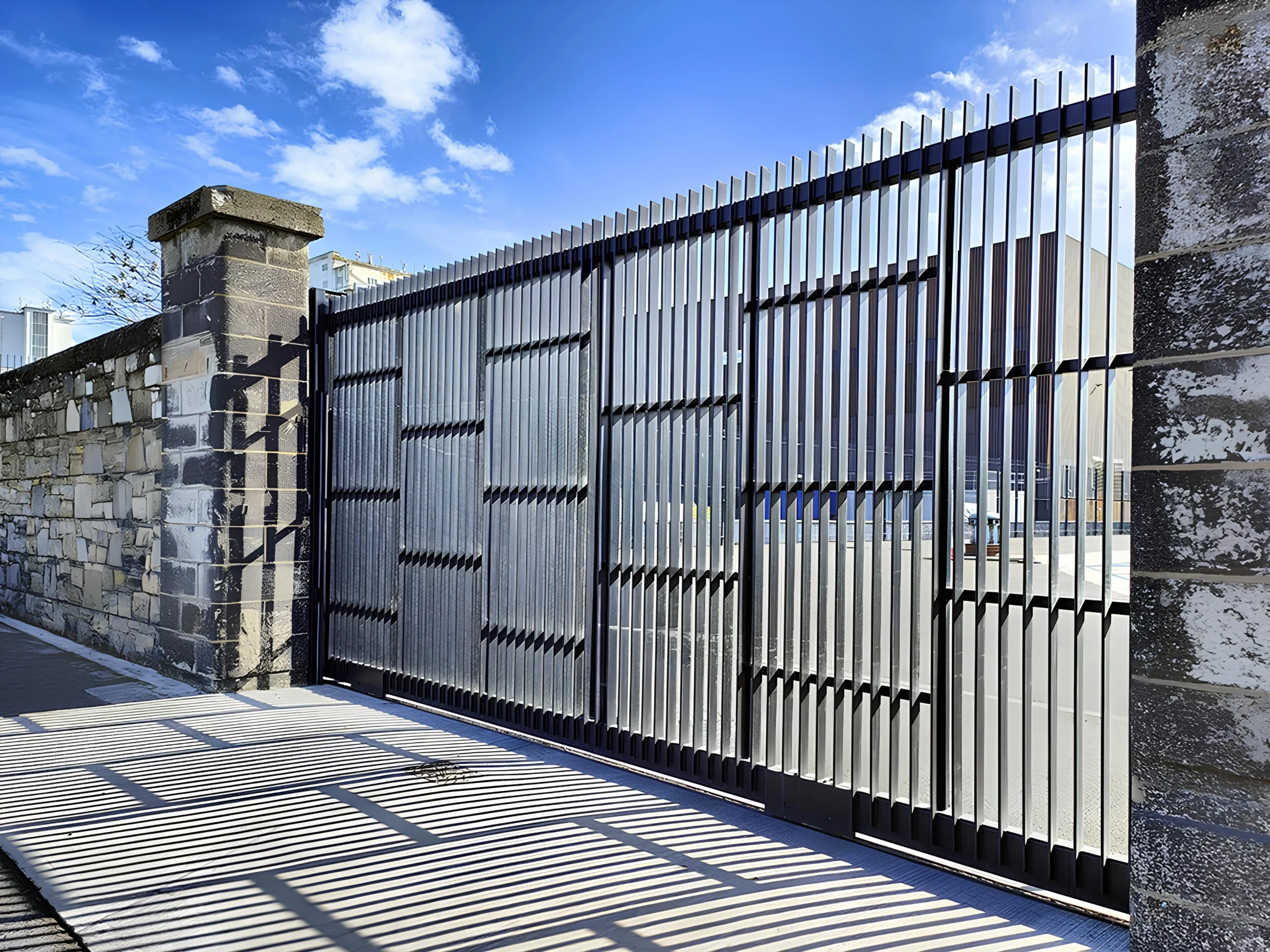
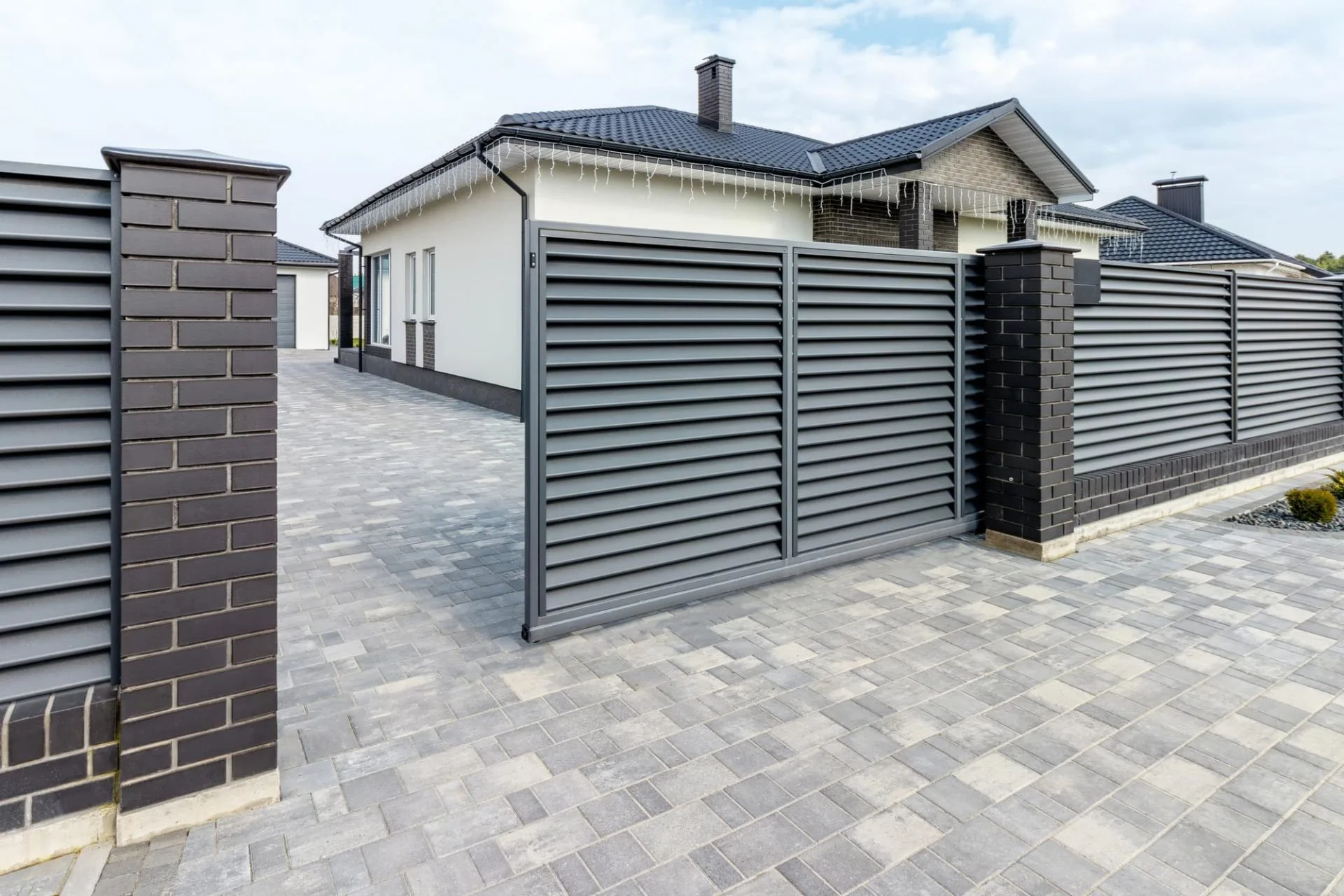
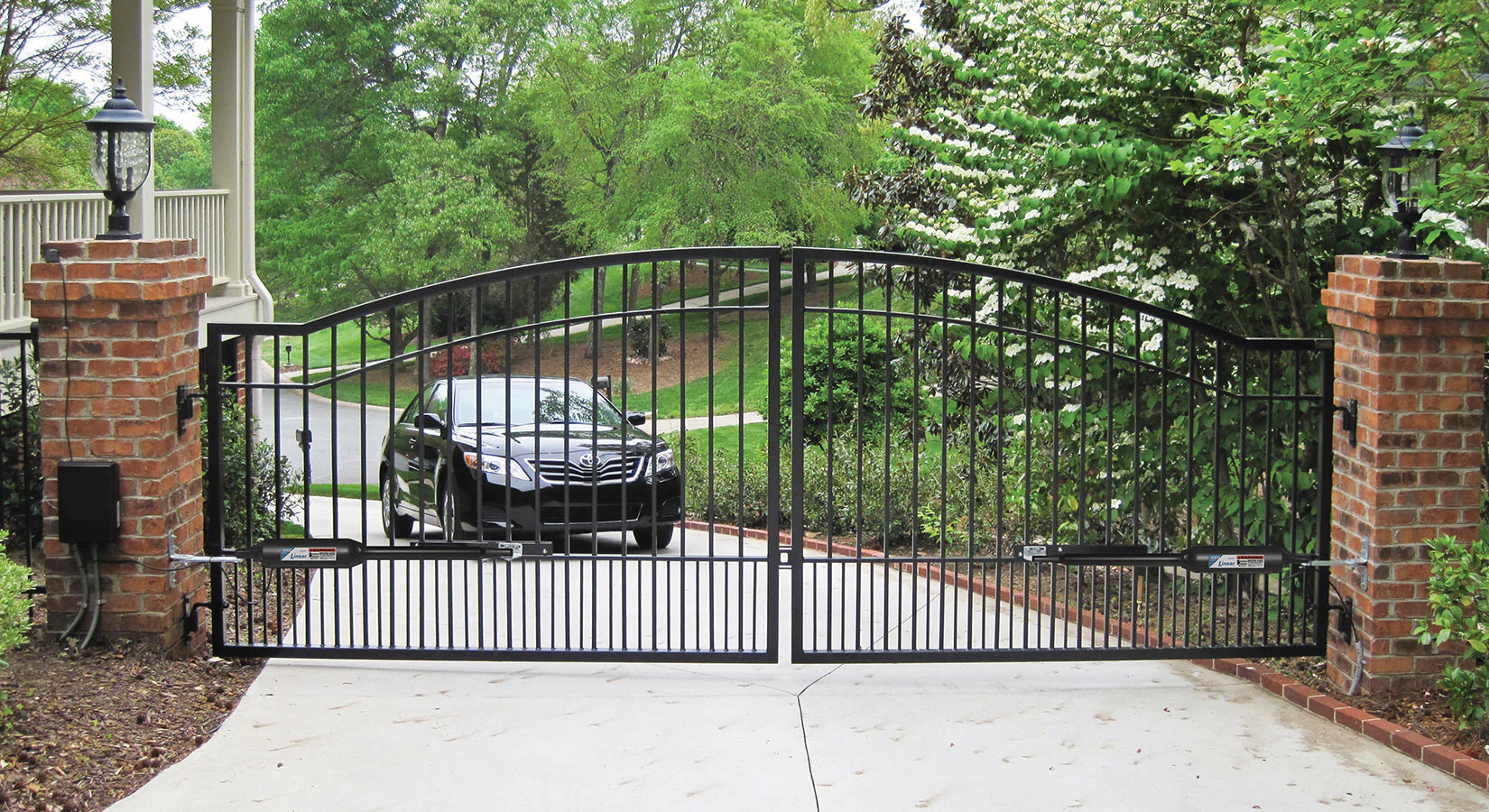
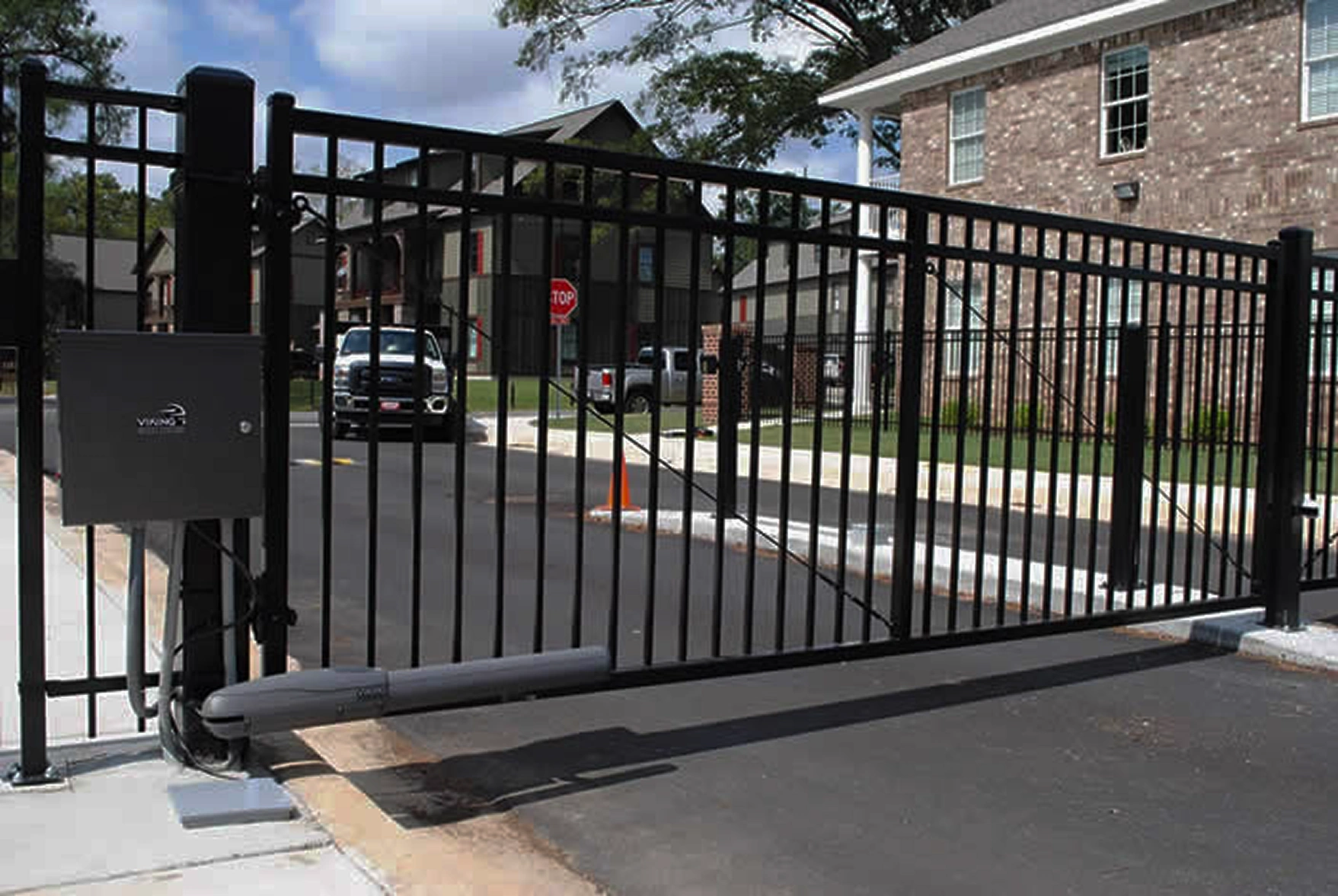
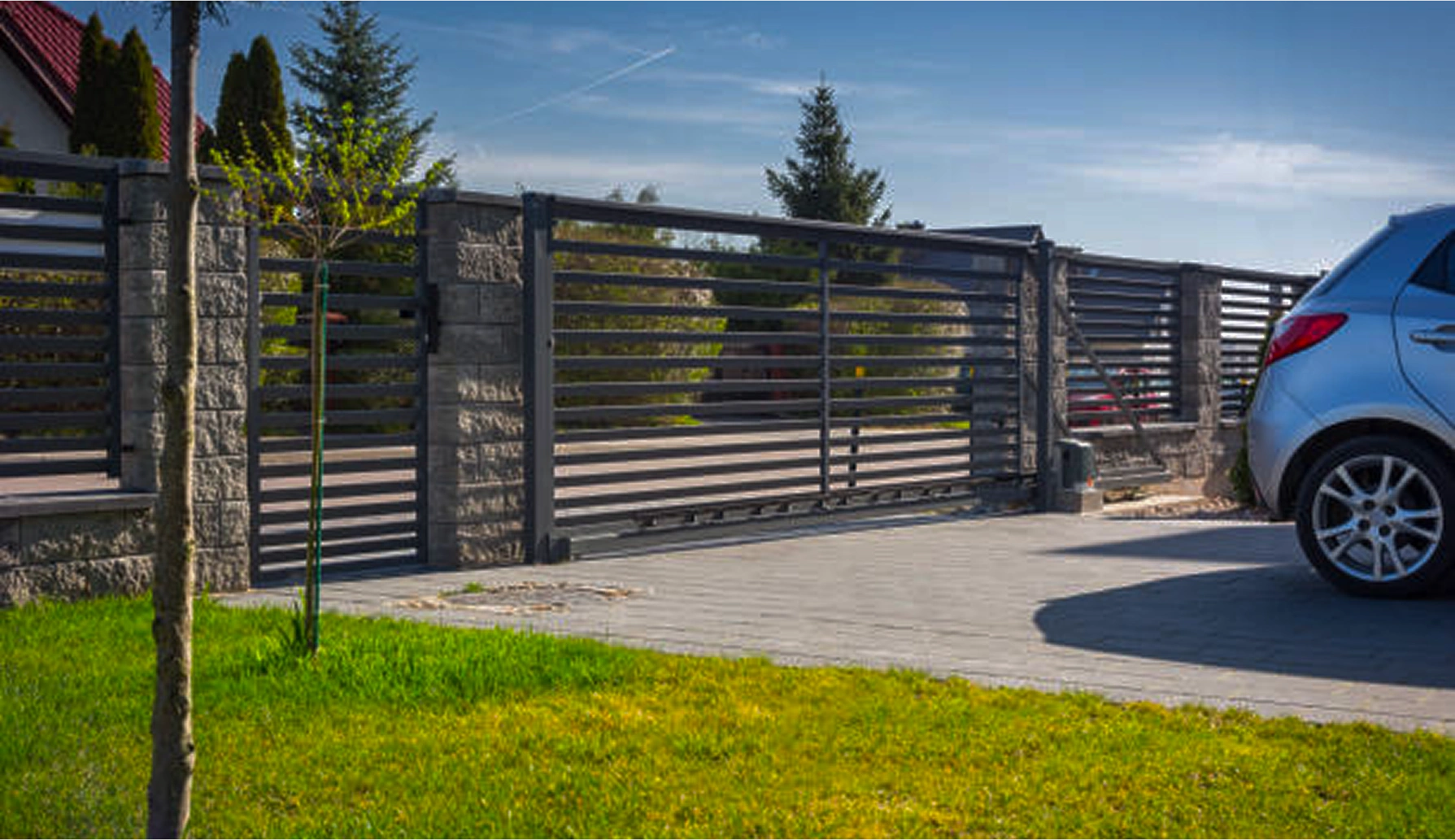
Commercial Electric Motorized Driveway Gates
Why Electric Motorized Gates are better than Manual Gates
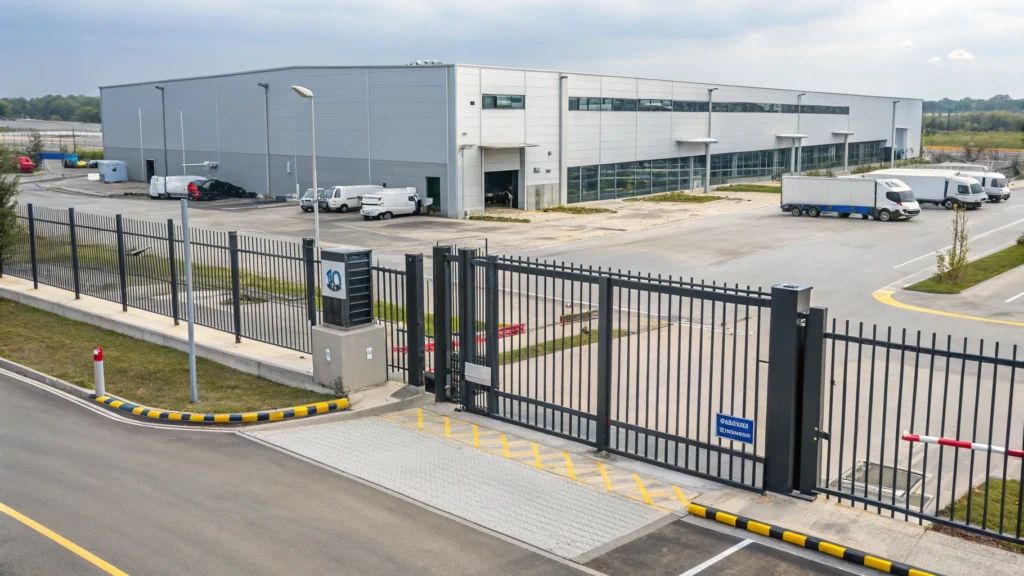
There are a lot of commercial properties across the Sacramento region—apartment complexes, storage facilities, industrial yards, office parks, HOA communities—that have a gate. A physical, metal gate spanning the entrance. And on paper, that gate provides security. But in practice, if it’s a manual gate that requires someone to physically get out, unlock it, swing or slide it open, drive through, then get out again to close it—that gate spends most of its life open. And a gate that stays open isn’t providing security. It’s providing the illusion of it.
Manual gates fail for one reason above all others: human compliance. A manual gate works perfectly—as long as every person who passes through it closes and locks it behind them. In a commercial environment with employees on staggered schedules, delivery trucks needing access throughout the day, and tenants who don’t want to get out of the car, compliance drops to near zero within weeks.
We see this constantly across the Sacramento area. A property manager at an apartment complex in Elk Grove invested in a heavy-duty slide gate, but tenants prop it open with cinder blocks. A warehouse operator in Rancho Cordova has a swing gate that hasn’t been closed in months because forklift drivers don’t want to stop and unlatch it between loads. A storage facility in Auburn has a gate that’s locked at night but wide open during business hours because the manager got tired of walking down to unlock it for every customer. In every case, the property owner paid for a gate—the steel, the posts, the footings—and got almost no security benefit from it. An electric gate eliminates the compliance problem entirely because it closes itself. Every time.
Comprehensive Guide to Electric Driveway Gates
What an Electric Commercial Gate System Actually Delivers
Automatic closure. The single most valuable feature. The gate opens for an authorized vehicle, the vehicle passes through, and the gate closes on a timer—typically 15 to 60 seconds, configurable to the property’s traffic pattern. No human action required. The gate is closed and locked by default, and it only opens when someone with valid credentials triggers it. This inverts the manual model, where the gate is open by default and only closed when someone makes the effort.
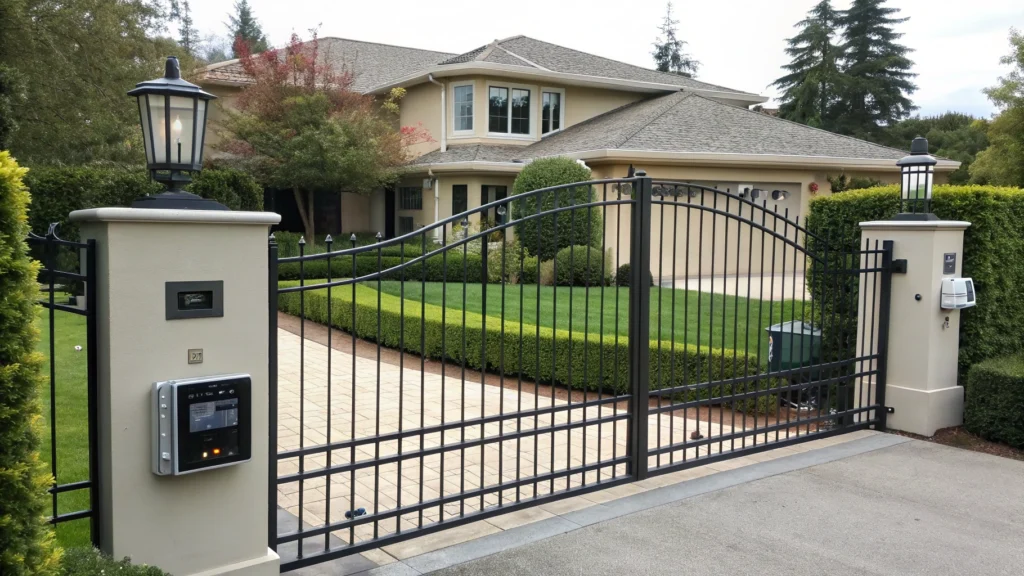
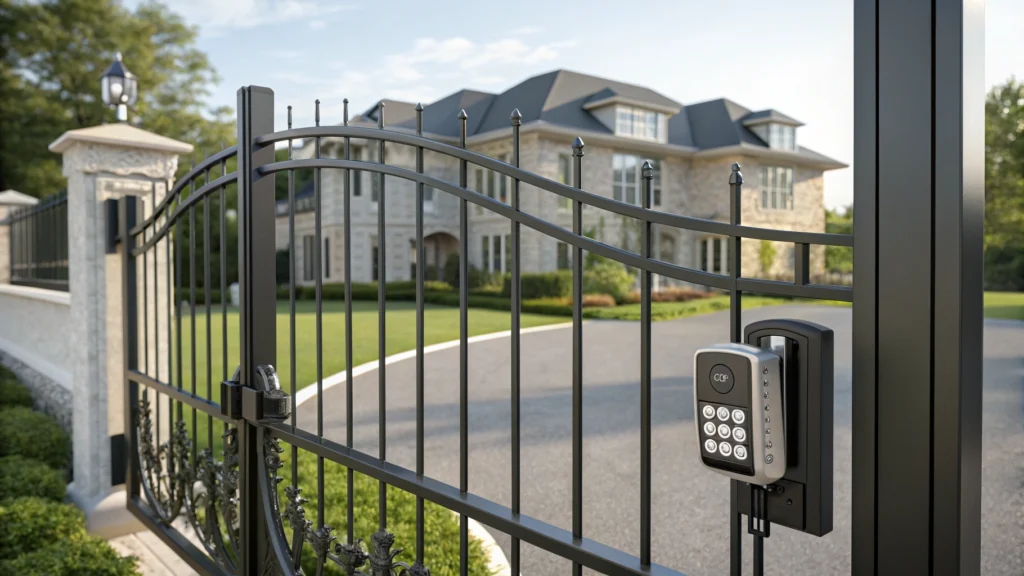
Scalable access control. A manual gate has one access method: a key or padlock combination that everyone shares. An electric gate supports keypads with individual user codes, RFID proximity cards, telephone entry and video intercom systems, smartphone app control, vehicle detection loops for hands-free exit, and—increasingly for Sacramento-area commercial properties—license plate recognition cameras that identify authorized vehicles automatically. Each method can be individually assigned, tracked, and revoked. When a tenant moves out or an employee is terminated, their access is deleted remotely. No locks to re-key, no combinations to change.
Timed scheduling and event logging. Electric gates can be programmed to operate on a schedule—open at 7 AM, lock down at 6 PM, different profiles for weekdays versus weekends. And every gate opening is recorded: who triggered it, what time, which credential was used. For property managers dealing with unauthorized access complaints, theft investigations, or tenant disputes about after-hours entry, this audit trail is invaluable. Manual gates have no logging whatsoever.
Safety Compliance, Liability Protection, and Insurance Benefits
Electric commercial gates fall under UL 325 Class II (commercial/general access) or Class III (industrial/limited access)—classifications that carry stricter safety requirements than residential systems. Class II applies to any property serving five or more residential units or the general public. Class III covers industrial sites with access restricted to trained personnel. These classifications require photo eyes, contact safety edges, and in-ground vehicle detection loops working together to prevent the gate from closing on a person or vehicle. The operator must monitor all connected safety sensors continuously and refuse to operate if any sensor fails.
This matters for liability. If someone is injured by a manual gate that was propped open and swings freely, or by a gate that was supposed to be locked but wasn’t, the property owner’s exposure is significant. A properly installed and maintained electric gate with UL 325-compliant safety devices provides documented proof that the access point was engineered, installed, and serviced to industry safety standards—a material difference in any liability dispute.
Commercial property insurers in Sacramento increasingly view automated access control as a risk-reduction measure. The documented reduction in unauthorized access, event logging for incident investigation, and UL 325 compliance documentation all contribute to a stronger risk profile. For apartment complexes, storage facilities, and industrial properties, the insurance implications of automated security are worth discussing with your carrier—many property managers discover that the premium reduction partially offsets the ongoing maintenance cost. Beyond insurance, prospective tenants evaluating apartment complexes in Roseville or Folsom, or businesses considering office space in Natomas, perceive an automated gate as a marker of property quality. A manual gate propped open with a cinder block sends the opposite signal.
What Transitioning From Manual to Electric Actually Involves
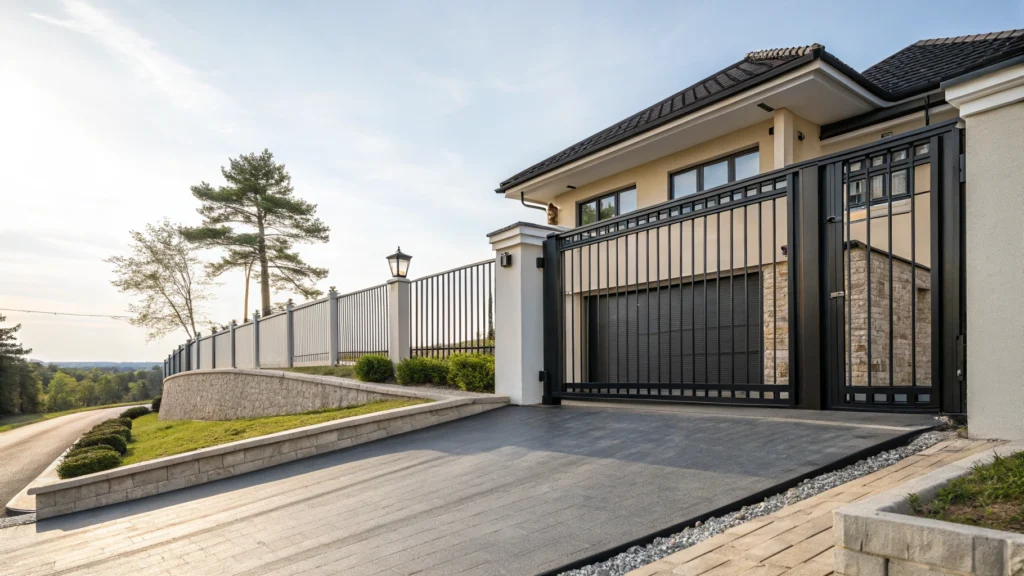
For property owners with an existing manual gate, the transition doesn’t necessarily mean ripping everything out and starting over. In many cases, the existing gate panel, posts, and track infrastructure can be retained—what changes is the addition of a commercial-grade operator, a control board, safety devices, and access control hardware.
The key requirements are power (a dedicated electrical circuit to the gate location, typically 120V or 240V for commercial operators), safety compliance (the existing gate must meet ASTM F2200 construction standards for automated operation—gap sizes, leading-edge design, structural integrity), and access control infrastructure (conduit runs for wiring between the operator, keypad or intercom location, and any loop detector cuts in the driveway surface).
For properties where the existing gate doesn’t meet ASTM F2200 standards—common with older manual gates that have oversized openings or insufficient structural rigidity—modifications or a new gate panel may be required before automation is possible. During our site assessment, we evaluate whether the existing infrastructure can be retrofitted or whether a new system is the more cost-effective path. We also test connectivity at the gate location for any intercom or smart access systems being considered.
The Cost Reality: Electric Gates Are an Operating Expense, Not Just a Purchase
The upfront cost of an electric commercial gate system is higher than a manual gate—that’s obvious. But what property owners sometimes underestimate is that electric gates have ongoing operating costs that manual gates don’t: quarterly or semi-annual preventive maintenance (commercial systems need more frequent service than residential due to higher cycle counts), potential monthly fees for cellular-connected intercom or LPR systems, and eventual component replacement as motors, boards, and sensors reach end of life.
The honest framing is that a commercial electric gate is an operating system, not a one-time purchase. It needs professional maintenance to function reliably—just like the HVAC, the elevator, or the fire alarm system in your building. The return on that investment comes from consistent security (the gate is actually closed), reduced liability exposure (UL 325 compliance), lower insurance risk, higher tenant satisfaction, and the elimination of the labor and frustration associated with a manual gate that nobody closes. When we quote a commercial electric gate project, we include the ongoing maintenance cost projection alongside the installation price so property owners can evaluate the full commitment upfront.
Find Out What an Electric Gate System Would Cost for Your Property
Every commercial property is different—gate span, traffic volume, access control complexity, power availability, and existing infrastructure all shape the system design and the cost. The best way to get an accurate picture is a site visit.
At Automated Gate Company, we provide free, no-obligation site assessments for commercial properties across Sacramento, Placer, El Dorado, and Nevada counties. We’ll evaluate your current gate (if you have one), assess the infrastructure needed for electrification, walk through the access control options that fit your operation, and give you a clear project estimate that includes both installation and ongoing maintenance costs.
Call (916) 713-5276 or contact us online to schedule your assessment.
Frequently Asked Questions
Have questions about our automated gate solutions? We’ve gathered answers to the most common inquiries. If you need more information, our team is here to help!
What are the benefits of using commercial electric driveway gates?
Commercial electric driveway gates provide enhanced security, optimized access control, and increased convenience. They are ideal for business, industrial, and institutional properties, offering hands-free operation and customizable features for high-traffic areas.
What types of commercial electric gates does The Automatic Gate Company offer?
The Automatic Gate Company offers both electric sliding and swing driveway gates. Sliding gates are perfect for warehouses, truck yards, and logistics centers, while swing gates provide a secure and impressive entry for hospitals, schools, hotels, and more.
Can I integrate my electric driveway gate with other security systems?
Yes, The Automatic Gate Company offers seamless integration with electronic access systems, including keypads, proximity cards, smartphone apps, vehicle detection loops, and surveillance cameras, providing full control over access management.
How does the installation of an electric gate work?
The installation process involves expert fabrication and custom design to fit your facility’s needs. Whether you choose sliding or swing gates, our team ensures a smooth installation with integrated security and automation features, tailored for high-traffic environments.
What maintenance services are available for commercial electric gates?
Regular maintenance services include electric motor lubrication, sensor and controller diagnostics, and metal track inspections. The company also offers fast emergency repairs and preventive service to ensure continuous gate performance and avoid disruptions.
What makes The Automatic Gate Company stand out for electric gate installations and repairs?
The Automatic Gate Company is known for its expertise in electric and motorized gate technology, custom installations using high-quality steel and industrial hardware, and responsive repair and maintenance services across Greater Sacramento.