Automatic gates rely on safety sensors to prevent accidents, protect people and vehicles, and keep the system operating legally. If the sensors stop working—even slightly—the gate can become dangerous or unreliable.
Here’s the good news: you don’t need technical experience to check whether your gate’s safety sensors are doing their job. This guide answers the most common questions homeowners have and shows you exactly what to look for.
Q: What do gate safety sensors actually do?
A: Safety sensors detect obstacles in the gate’s path.
When something interrupts the sensor beam or triggers the sensor field, the gate should stop, reverse, or refuse to close.
Working sensors prevent:
- The gate closing on a car
- The gate hitting a person or pet
- Damage to the gate motor
- Liability issues for the property owner
If the sensors fail, the gate may close when it shouldn’t—and that’s when accidents happen.
Q: What’s the easiest way to check if the sensors are aligned and working?
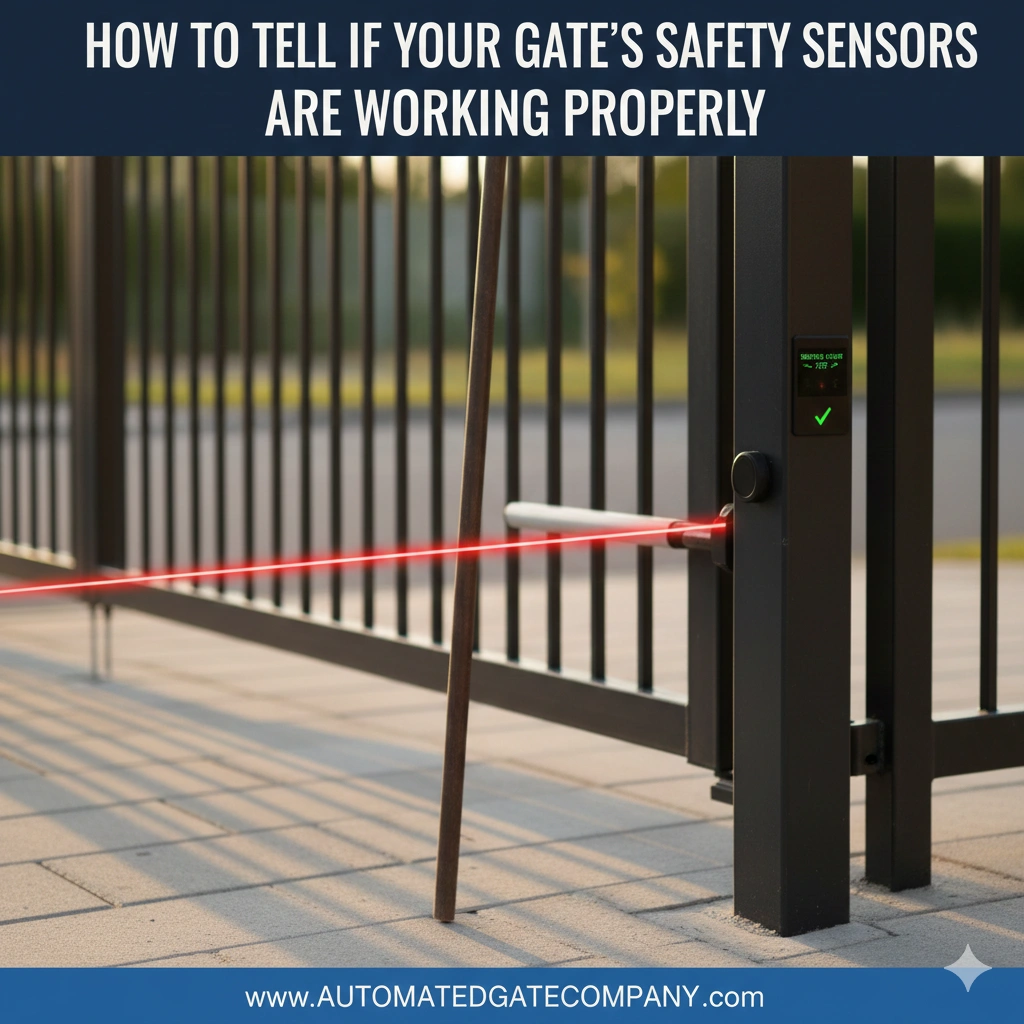
A: Stand near your gate and do a simple obstruction test.
Here’s how:
- Make sure the gate is closing.
- As it moves, wave a long object (a stick, broom, etc.) through the sensor line.
- The gate should stop immediately and reverse or reopen.
If the gate keeps closing, the sensors aren’t working correctly.
Q: How can I tell if the sensor eyes themselves are clean and aligned?
A: Look directly at each sensor. Most systems have two sensors facing each other across the gate opening.
Check for:
- Dirt, spider webs, or debris covering the lens
- Sensors that look tilted or bumped
- Make sure they are pointed directly at each other
- Physical damage from landscapers or weather
Clean the lenses with a soft cloth. If the sensors look crooked or loose, they may need adjustment.
Q: Should the sensors have lights on them?
A: Yes—on most systems.
Typical signs:
- Solid light = aligned and working
- Blinking light = misaligned
- No light = power problem or damaged sensor
If you see a blinking or missing light, the sensor beam isn’t connecting properly.
Q: What about the gate stopping randomly—could sensors cause that?
A: Absolutely.
People often blame the motor, but malfunctioning sensors can make the gate stop halfway, refuse to close, or reopen unexpectedly.
Sensors can trigger falsely due to:
- Loose wiring
- Weak power supply
- Misalignment
- Heavy rain or fog
- Dirty lenses
- Shadows or bright sunlight
If the gate behaves unpredictably, sensors are often the culprit.
Q: How do I test pressure/force safety (if my system has it)?
A: Many gates include a feature that detects physical resistance.
A simple test:
- Start the gate closing.
- Gently press against the gate with light pressure.
- The gate should stop or reverse when resistance is detected.
If it keeps pushing with force, the safety system needs immediate attention.
Q: What are the signs that my gate’s safety sensors are failing?
Look for:
- Gate won’t close
- Gate closes partway, then reopens
- Gate stops randomly
- Sensor lights blinking
- No sensor light at all
- Gate closes even when something is in the way
- “Sensor error” on the control box (if your system displays messages)
Any of these symptoms means the sensors need cleaning, alignment, or service.
Q: How often should I check the safety sensors?
A: Once a month is ideal for homeowners.
For commercial properties with heavy use, check weekly.
A fast visual inspection prevents:
- Gate damage
- Injury
- Liability issues
- Motor burnout
Safety sensors are small, but they protect everything around your gate.
Q: When should I call a professional?
Call a gate technician if:
- The gate doesn’t react to obstructions
- Lights blink even after cleaning
- The sensors look damaged
- Wiring seems loose or exposed
- The gate behaves unpredictably
- You’re unsure how to adjust the sensors safely
A professional can test alignment, wiring, voltage, force settings, and compliance with safety standards.
Why This Matters
Properly working safety sensors are the difference between a gate that protects your property and a gate that puts people at risk.
A quick monthly check keeps your system safe, reliable, and code-compliant.
Need Help? We Can Test and Repair Your Sensors
If you’re not sure whether your gate’s safety sensors are working—or if your gate has been acting strange—we are happy to send one of our expert automated gate technicians out to inspect, test, clean, align, and repair all sensor types.
Give us a call at 916-713-5276 or send us an email!