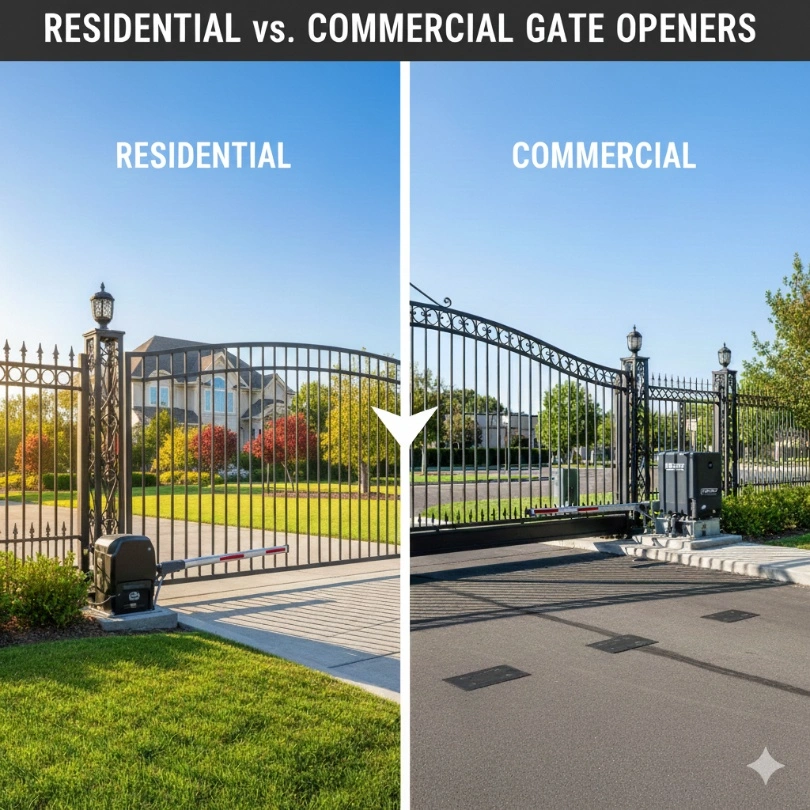
When you see an automated gate, it might look like a simple piece of moving metal. However, the technology powering that gate varies wildly depending on whether it’s guarding a private driveway in Granite Bay or a high-traffic distribution center in Sacramento.
At Automated Gate Company, we specialize in both residential and commercial installations across Placer, Sacramento, and Nevada Counties. Understanding the technical differences in motor power, safety sensors, and access control is key to choosing a system that won’t let you down.
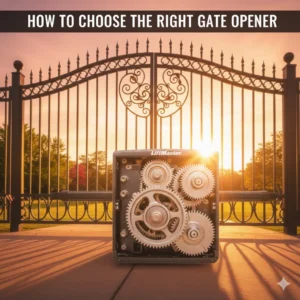
1. The Motor: Duty Cycles and Weight Limits
The biggest difference between residential and commercial operators is the “Duty Cycle”—essentially, how many times the gate can open and close per hour without overheating.
- Residential Operators: These are designed for a few cycles a day—leaving for work, coming home, and the occasional guest. Models like the LiftMaster LA400 and LA500 (swing) or the RSL12UL and RSW12UL (slide/swing) are optimized for smooth, quiet operation at a home.
- Commercial Operators: In an apartment complex in Roseville or a yard in Rancho Cordova, a gate might open 50+ times an hour. Commercial units like the CSL24UL or IHSL24UL are built with heavy-duty gearboxes and brushless DC motors to handle constant use and gates weighing up to several thousand pounds.
2. Safety vs. Detection: Layering Sensors
Safety is non-negotiable, but the way we detect vehicles and pedestrians varies by property type.
- Residential Setup: Homes primarily rely on Photo Eyes (infrared beams) and Bump Edges (pressure-sensitive strips) to stop a gate from closing on a person or pet.
- Commercial & Multi-Family Setup: These high-traffic sites use the same photo eyes and bump edges for safety, but they add Ground Loops.
- The Power of Loops: These are wires saw-cut into the pavement that detect the metal mass of a vehicle. Safety/Shadow Loops ensure the gate never closes if a car is sitting in the path, while Exit Loops allow for “hands-free” automatic opening when a car approaches from the inside.
3. High-Tech Access: Commercial Security
While a homeowner might use a remote “clicker,” commercial properties require enterprise-level access:
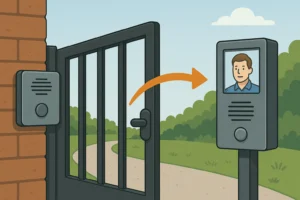
- RFID & LPR: Tags on windshields or License Plate Recognition cameras grant access automatically to authorized employees.
- Emergency Egress: Click2Enter allows first responders in Auburn or Lincoln to open the gate via their emergency radio.
- Knox Boxes: Mandatory in many local fire districts, these allow the fire department to gain immediate access using a master key.
Technical Comparison Table
Feature | Residential Models (e.g., LA400, RSW12UL) | Commercial Models (e.g., CSL24UL, IHSL24UL) |
Common Use | Single-family homes | High-traffic, Industrial, Apartment Complexes |
Max Gate Weight | 850 – 1,000 lbs | 1,500 – 5,500 lbs |
Duty Cycle | Limited (e.g., 100–250 cycles/day) | Continuous Duty (unlimited cycles) |
Primary Safety | Photo Eyes & Bump Edges | Photo Eyes, Bump Edges, and Ground Loops |
Emergency Access | Battery Backup / Manual Key | Knox Box / Click2Enter / Timer-to-Close |
Motor Type | 12V / 24V DC | Heavy-Duty Brushless DC / Oil-Bath Gearbox |
Ready to Upgrade Your Security?
Don’t guess on your motor requirements or safety compliance. Whether you need a reliable LA500 for your estate in Grass Valley or a high-speed IHSL24UL for a facility in North Highlands, let the experts at Automated Gate Company design a system tailored to your needs.
Contact us for a professional consultation:
- Phone: 916-713-5276
- Email: info@automatedgatecompany.com
- Serving: Sacramento, Folsom, Roseville, Rocklin, Auburn, Grass Valley, and Nevada City.