Sacramento is hot. That’s not exactly breaking news to anyone who lives here. But what most homeowners don’t realize is just how hard those relentless summer temperatures are working against their automatic gate — quietly degrading components, shortening equipment life, and setting the stage for failures that always seem to happen at the worst possible time.
In 2024, Sacramento recorded 45 days of triple-digit heat — nearly double the typical annual average of 24. The National Weather Service confirmed that the stretch from late June through mid-July was the hottest 20-day period ever recorded in downtown Sacramento, with average highs reaching nearly 104 degrees. And 2024 wasn’t a fluke. Seven of the city’s ten hottest summers on record have occurred in just the last decade, and climate projections suggest this trend is only accelerating.
Your gate operator sits outside, exposed to every single one of those scorching days. Here’s what that heat is actually doing to it — and what you can do to fight back.
What Happens Inside Your Gate Operator When It's 105 Degrees Outside
Most homeowners think of their gate operator as a simple machine: a motor that opens and closes the gate. But inside that housing is a surprisingly sensitive ecosystem of electronics — a control board, capacitors, wiring, a transformer, and a motor — all of which are affected by heat in different ways.
The motor. Your gate operator’s motor generates its own heat every time it cycles. Under normal conditions, that heat dissipates between uses. But on a 105-degree day, the motor is already starting hot. It has far less headroom before it reaches its thermal limit. If you have a household with multiple drivers coming and going — kids leaving for work, deliveries arriving, guests stopping by — that motor may cycle a dozen or more times in a few hours. Each cycle adds heat that the motor can’t shed fast enough in extreme ambient temperatures. The result is a thermal overload trip: the motor’s built-in protection shuts the system down to prevent permanent damage. Your gate simply stops working until the motor cools off.
The control board. This is the brain of your gate operator, and it’s arguably the most vulnerable component in extreme heat. Control boards contain electrolytic capacitors — small components filled with liquid electrolyte that are essential to the board’s function. Heat accelerates the evaporation of that electrolyte, and the degradation compounds over time. Industry data shows that every roughly 10-degree Celsius increase in operating temperature can cut a capacitor’s functional lifespan in half. On a Sacramento summer day, the interior of an unshaded, dark-colored gate operator housing can easily reach 130 to 150 degrees — far beyond the comfortable operating range for these components. Over a few brutal summers, your control board ages years in months.
The battery. We’ve discussed backup battery health in the context of wildfire safety, but heat takes its own separate toll. Lead-acid batteries — the type found in most gate operator backup systems — are particularly sensitive to high temperatures. Every 8-degree Celsius rise above the battery’s rated temperature can cut its service life roughly in half. A battery rated for three to five years in mild conditions may last barely a year in a gate operator housing baking in direct Sacramento sun. And when that battery fails, you lose your backup power — which means no gate operation during a power outage or PSPS event, right when you need it most.
Lubricants and moving parts. The grease and oil that keep your gate’s hinges, rollers, chains, and gear assemblies moving smoothly don’t just stay put in extreme heat. High temperatures cause lubricants to thin out, migrate away from contact surfaces, and break down chemically. The result is increased friction, accelerated wear on mechanical components, and a gate that starts to sound and feel sluggish. Metal components also expand in the heat, which can push a sliding gate out of alignment with its track or cause a swing gate’s arm to bind.
Wiring and connections. Heat causes wiring insulation to become brittle over time, and repeated thermal cycling — hot days followed by cooler nights — stresses electrical connections. Loose terminals generate their own heat through resistance, creating a compounding problem. What starts as a slightly warm connection point can eventually lead to arcing, component damage, or a complete failure.
The Silent Killer: Your Control Box as an Oven
Here’s the detail that makes Sacramento’s heat particularly devastating for gate operators, and it’s the angle that almost nobody in our industry talks about: the greenhouse effect inside your control box.
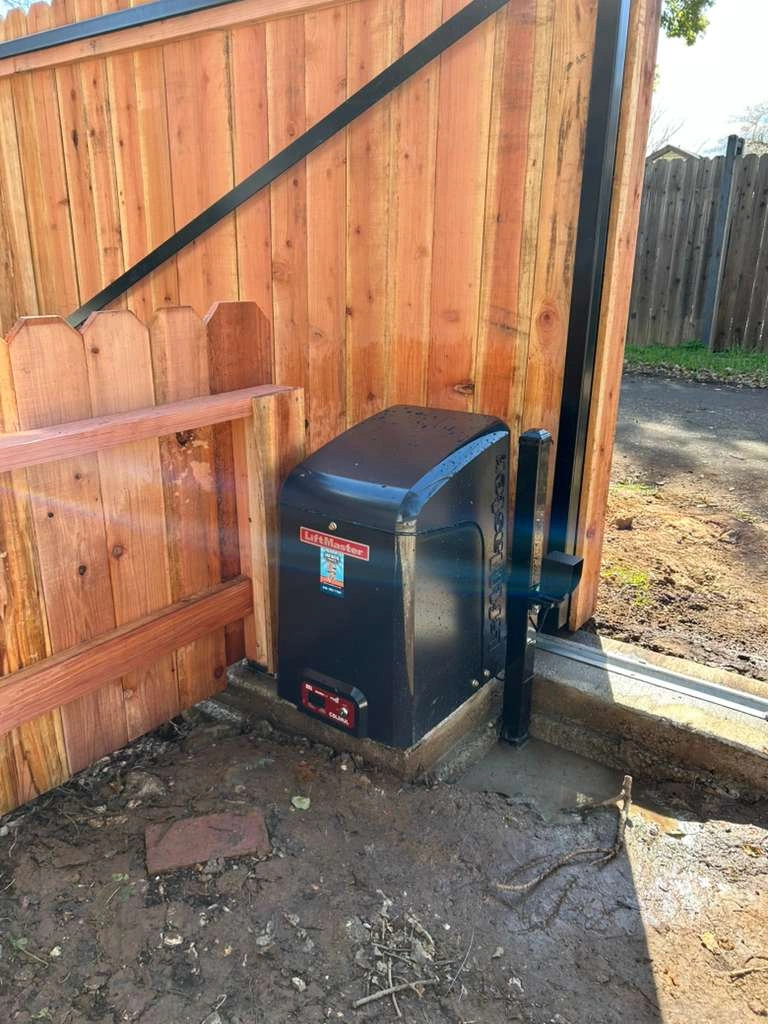
Your gate operator’s housing is, in essence, a sealed or semi-sealed metal or plastic enclosure sitting in direct sunlight. On a day when the air temperature is 105 degrees, the surface temperature of that enclosure can easily reach 140 to 160 degrees or higher — especially if it’s dark-colored. The interior temperature, where your control board and electronics live, follows right along.
Now consider that these electronics are also generating their own heat during operation. You’re stacking internal heat generation on top of extreme ambient heat, inside an enclosure with limited or no airflow. The control board, the transformer, the capacitors — they’re all cooking, slowly and steadily, for months on end.
This is why gate operators in the Sacramento region fail at higher rates than those in milder climates, and why the failures tend to cluster in late summer and early fall. By August or September, your equipment has endured months of cumulative thermal stress. Components that were hanging on finally give out. You press the button, and nothing happens.
How to Protect Your Gate Operator From the Heat
The good news is that there are practical, effective steps you can take to dramatically reduce heat-related wear on your gate operator. Some of these are simple weekend projects. Others are things we can address during a professional maintenance visit.
Shade the operator housing. This is the single most impactful thing you can do. Direct sunlight on the operator housing is the primary driver of extreme interior temperatures. A purpose-built shade structure, a small pergola, or even a well-positioned shade sail can reduce the housing’s surface temperature significantly. The key is to shade the housing without restricting airflow around it — you want to block the sun, not trap hot air.
Improve ventilation. Many gate operator housings can be modified to allow better airflow without compromising weather resistance. Vented louvers, mesh-covered openings positioned to allow convective airflow, or even a small solar-powered ventilation fan can help move hot air out of the enclosure. This is especially important for operators mounted in enclosed pilaster boxes or low-clearance installations where air circulation is naturally limited.
Consider housing color. If your gate operator housing is dark-colored — black, dark bronze, or dark brown — it’s absorbing significantly more solar radiation than a lighter-colored housing would. A lighter enclosure color, or even a reflective cover, can reduce surface temperatures substantially. This is a detail that’s easy to overlook during installation but makes a meaningful difference over years of Sacramento summers.
Keep it clean. Dust, cobwebs, and debris inside the operator housing act as insulation, trapping heat around components that need to dissipate it. Insects are drawn to the warmth of electrical enclosures, and their nests can block ventilation pathways. A regular cleaning — even just opening the housing and clearing out accumulated grime — helps your system breathe.
Maintain your lubricants. In Sacramento’s heat, lubricants need to be applied more frequently than the manufacturer’s general recommendations suggest. Those guidelines are typically based on moderate climates. Here, you may need to re-lubricate hinges, rollers, chains, and gear assemblies twice as often to account for accelerated breakdown. Using high-temperature-rated lubricants designed for extreme conditions can also make a significant difference.
Monitor your battery. As we discussed, heat is a battery killer. Have your backup battery tested at least annually — ideally before summer hits — and replace it proactively if it’s showing any signs of reduced capacity. Don’t wait for it to fail completely. A dead backup battery during a summer PSPS event or wildfire evacuation is a serious safety concern, not just an inconvenience.
Reduce unnecessary cycling. If your household’s traffic pattern involves the gate opening and closing dozens of times during the hottest part of the day, consider whether an “auto-close” timer adjustment might help. Extending the hold-open time so the gate doesn’t cycle as frequently during peak heat reduces the thermal load on the motor. Some operators also offer a “party mode” or “hold open” function that can be useful when you’re expecting heavy traffic.
Why This Matters More Than You Think
A new gate operator control board can cost hundreds of dollars for parts alone, plus the labor to diagnose the problem, remove the old board, program the new one, and get your system back online. A motor replacement is even more expensive. And these repairs always seem to happen on the hottest day of the year, when your driveway is blocked and the technician’s schedule is packed with other heat-related calls.
Proactive heat protection isn’t just about extending equipment life — it’s about avoiding the disruption, the expense, and the security gap that comes with a gate that stops working in the middle of summer. A gate that won’t open or close is a gate that isn’t protecting your property or your family.
Our Maintenance Package: Built for Sacramento Summers
This is exactly why our annual gate operator maintenance package goes beyond basic lubrication and a quick visual inspection. We built our service specifically for the conditions Sacramento-area homeowners actually face — and that means heat is front and center.
During your annual maintenance visit, we inspect and test your backup battery under load to verify it will perform when the power goes out. We check every electrical connection for signs of heat stress, corrosion, or looseness. We examine your control board for visible signs of capacitor swelling or discoloration — early indicators that heat damage is accumulating. We clean the interior of your operator housing, verify proper ventilation, and lubricate all moving parts with products rated for our extreme summer conditions. We test the motor’s operation and check for signs of thermal stress. And we make recommendations for shade, ventilation, or other improvements specific to your installation.
When you invest in yearly maintenance, you’re not just keeping your gate running — you’re protecting the entire system from the slow, invisible damage that Sacramento’s heat inflicts every single summer. You’re catching small problems before they become expensive failures. And you’re ensuring that your gate will work reliably on the day you need it most, whether that’s a 112-degree afternoon in July or a PSPS event during fire season.
The Bottom Line
Sacramento’s summers are getting hotter, and they’re getting longer. The equipment sitting outside your property — exposed to every degree of that heat — needs more than a set-it-and-forget-it approach. Your gate operator is a significant investment in your home’s security, convenience, and property value. Protecting it from heat damage is one of the smartest, most cost-effective things you can do as a homeowner.
Don’t wait for a failure to remind you that your gate operator needs attention. Contact us today to schedule your annual maintenance and make sure your system is ready to handle whatever this summer brings.